
Black Friday Statistics 2026: Usage, Market Size and Trends
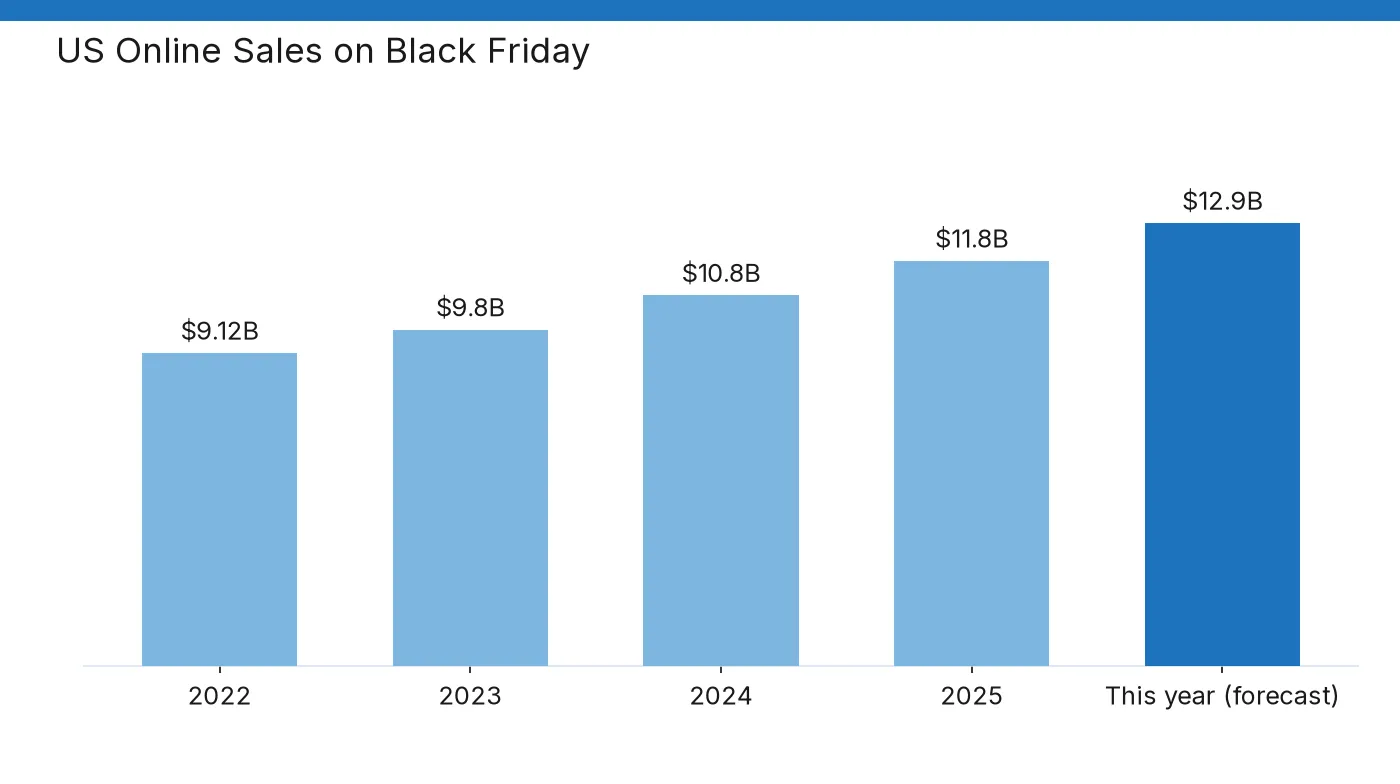
These Black Friday statistics start with a record: US shoppers spent $11.8 billion online on Black Friday 2025, up 9.1% from the year before.
A record 202.9 million people shopped over Thanksgiving weekend, and Black Friday online sales are forecast to reach $12.9 billion this year.
Below, we cover sales, shoppers, spending, Cyber Week, phones, pay later, discounts, AI and what to expect in 2026.
Top Highlights
- US shoppers spent a record $11.8 billion online on Black Friday 2025, up 9.1%.
- Black Friday online sales are forecast to reach $12.9 billion in 2026.
- A record 202.9 million people shopped over Thanksgiving weekend in 2025.
- 126 million people plan to shop on Black Friday this year.
- Worldwide online sales on Black Friday hit about $79 billion in 2025.
- Phones made up 55.2% of US online Black Friday sales.
- Traffic from AI tools to retail sites jumped 805% on Black Friday 2025.
- Electronics discounts peaked at 30.9% off list prices last season.
How Much Do Shoppers Spend Online on Black Friday?
US shoppers spent a record $11.8 billion online on Black Friday 2025, up 9.1% from $10.8 billion in 2024.
That beat the $11.7 billion forecast made before the day, and at the busiest point shoppers spent about $12.5 million every minute. Black Friday statistics over a longer stretch show how far the day has come: online sales were $3.54 billion ten years earlier, so they have more than tripled.
| Year | US online sales on Black Friday |
|---|---|
| 2026 (forecast) | $12.9 billion |
| 2025 | $11.8 billion |
| 2024 | $10.8 billion |
| 2023 | $9.8 billion |
| 2022 | $9.12 billion |
What this means: Black Friday statistics show the day is no longer just about store queues. It is now one of the two biggest days for online sales in the US, and it keeps setting new records.
How Many People Shop on Black Friday?
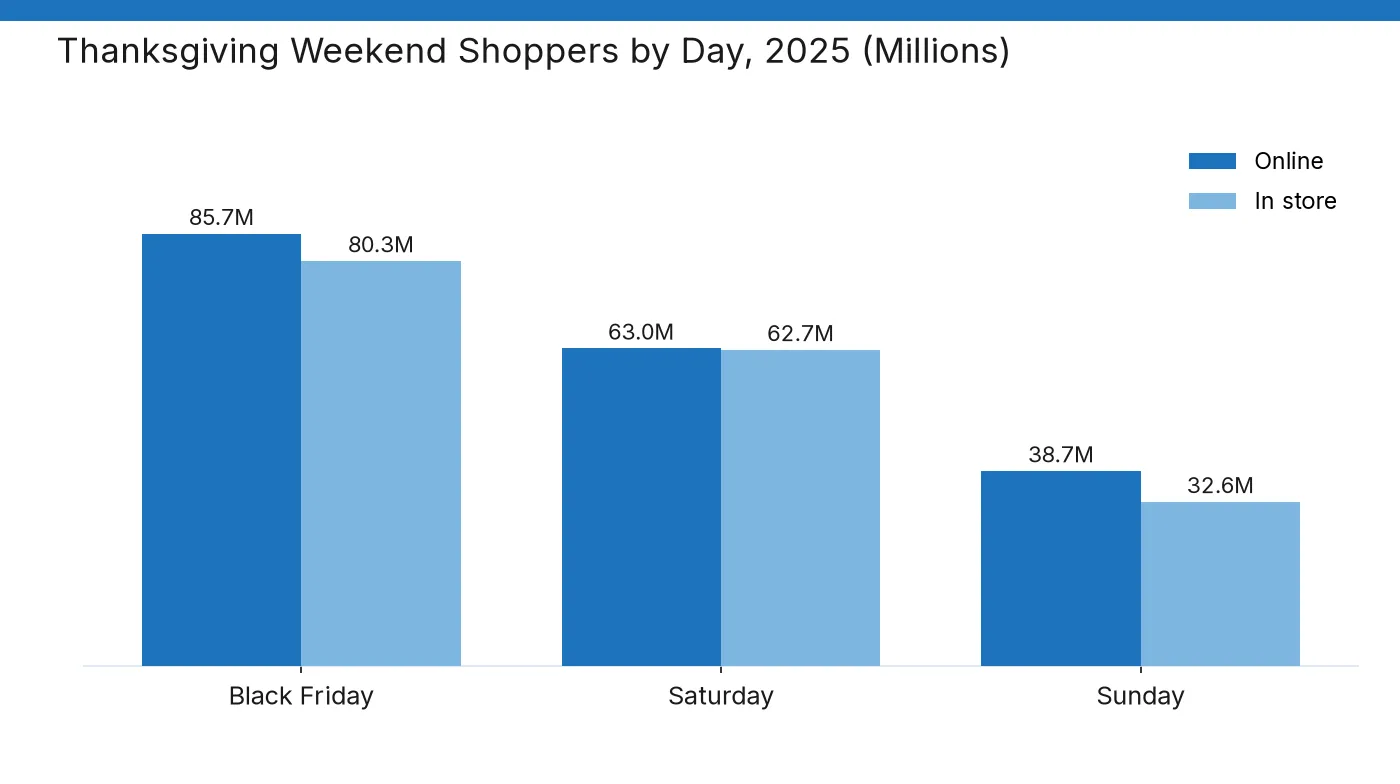
In 2025, 85.7 million Americans shopped online on Black Friday and 80.3 million shopped in stores.
Both figures dipped slightly from 87.3 million and 81.7 million, yet Black Friday stayed the busiest day of the weekend. Saturday came next, with about 63 million people shopping online and 62.7 million in stores.
| Day (2025) | Online shoppers | In store shoppers |
|---|---|---|
| Black Friday | 85.7 million | 80.3 million |
| Saturday | 63.0 million | 62.7 million |
| Sunday | 38.7 million | 32.6 million |
How Many People Shop Over Thanksgiving Weekend?
Black Friday statistics show a record 202.9 million people shopped from Thanksgiving Day through Cyber Monday in 2025.
That beat 197 million in 2024 and the old record of 200.4 million from 2023. Online shoppers climbed 9% to 134.9 million, while store shoppers rose 3% to 129.5 million. Sunday stood out, with a record 32.6 million people in stores, up 27%.
| Thanksgiving weekend shoppers | 2025 | 2024 |
|---|---|---|
| Total shoppers | 202.9 million | 197.0 million |
| Shopped online | 134.9 million | 124.3 million |
| Shopped in stores | 129.5 million | 126.0 million |
| Cyber Monday online | 75.9 million | 64.4 million |
For this year, 182.7 million people say they plan to shop over the weekend. That is a little lower than last year’s planned figure of 186.9 million, mostly because 60% of shoppers now start by early November.
What this means: Black Friday statistics on the long weekend show it is still the main event of the season, but early sales are spreading holiday shopping across more of November.
How Much Does the Average Shopper Spend Over Black Friday Weekend?
Shoppers spent an average of $337.86 on holiday items over Thanksgiving weekend in 2025, up from $315.56.
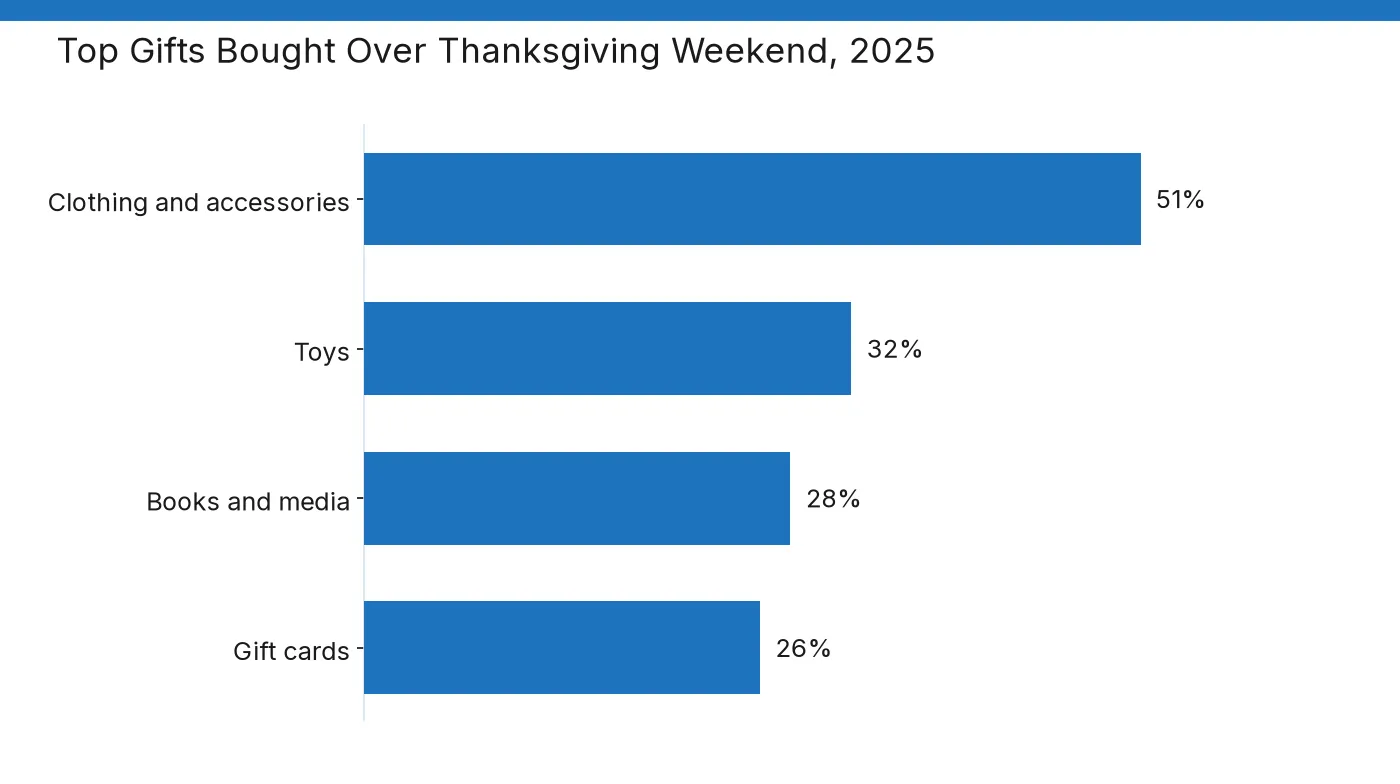
That is the highest average since 2019, when it reached $361.90. About 67% of the money, or $225.74 per person, went on gifts, and 96% of weekend shoppers bought at least one holiday item.
| Gift type (2025) | Share of weekend shoppers |
|---|---|
| Clothing and accessories | 51% |
| Toys | 32% |
| Books and media | 28% |
| Gift cards | 26% |
Gift ideas often start with a search box, as 37% of shoppers say online search is where they find most gift ideas this year. Our SEO statistics for online stores show why ranking for gift terms matters so much in this season.
What this means: Black Friday statistics on spending show people are not just browsing. They come with gift lists and spend more each year.
How Did Black Friday Compare With the Rest of Cyber Week?
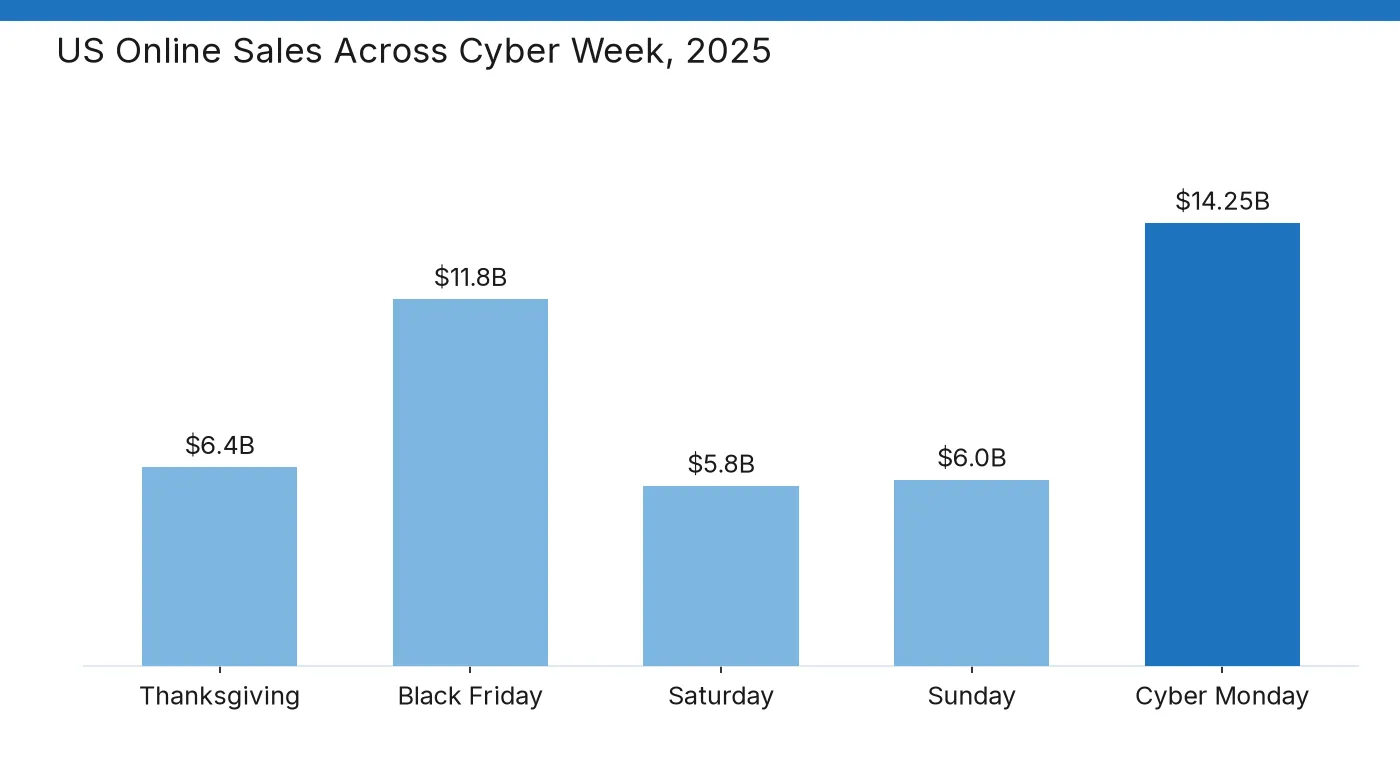
US shoppers spent $44.2 billion online across the five days of Cyber Week 2025, up 7.7%.
Cyber Monday led with $14.25 billion, up 7.1%, and Black Friday followed at $11.8 billion. The weekend in between added another $11.8 billion, up 8.7%, while Thanksgiving Day brought in $6.4 billion.
| Day | 2025 online sales | 2024 online sales |
|---|---|---|
| Cyber Monday | $14.25 billion | $13.3 billion |
| Black Friday | $11.8 billion | $10.8 billion |
| Thanksgiving Day | $6.4 billion | $6.1 billion |
| Sunday | $6.0 billion | $5.6 billion |
| Saturday | $5.8 billion | $5.3 billion |
What this means: these Black Friday statistics show Cyber Monday still wins on dollars, but Black Friday has grown faster for two years running, so the gap is shrinking.
How Big Is Black Friday Around the World?
Shoppers around the world spent about $79 billion online on Black Friday 2025, up 6%.
These global Black Friday statistics use a wider count that tracks more retailers. On it, the US share was about $18 billion. Global online sales for the whole of Cyber Week reached $336.6 billion, up 7%, and Black Friday also made up 31% of all in store sales that week.
| Global measure (2025) | Online sales | Growth |
|---|---|---|
| Cyber Week worldwide | $336.6 billion | 7% |
| Cyber Week in the US | $79.6 billion | 5% |
| Black Friday worldwide | $79 billion | 6% |
| Cyber Monday worldwide | $53 billion | 7% |
This year, global Cyber Week sales are forecast to reach $357 billion, with $84 billion of that in the US.
What this means: Black Friday statistics now describe a worldwide event. Stores far outside the US plan their biggest sale of the year around it.
How Much of Black Friday Shopping Happens on Phones?
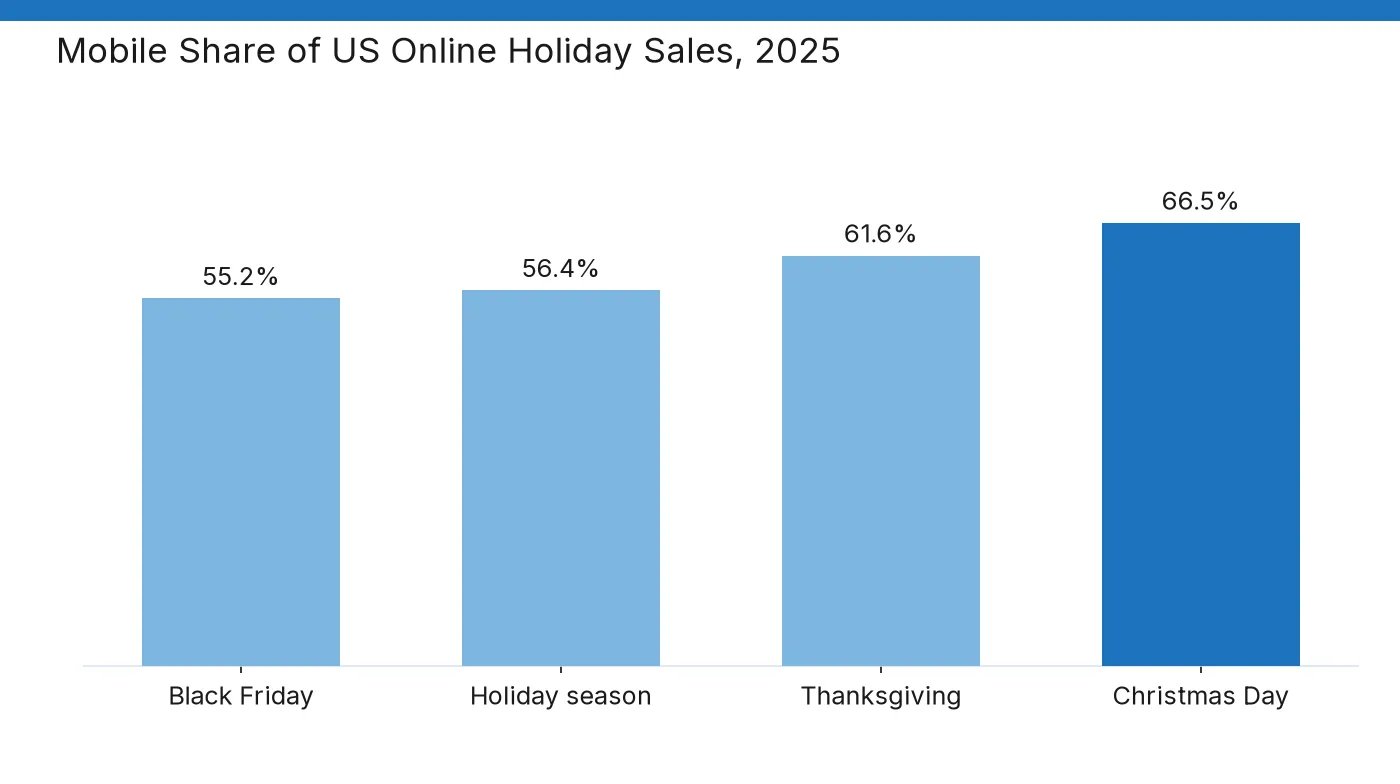
Black Friday statistics show phones made up 55.2% of US online sales on Black Friday 2025, about $6.5 billion, up 10.2%.
Black Friday statistics on devices go beyond one day. Mobile reached 56.4% of online spending across the full holiday season, and it peaked on Christmas Day at 66.5%. Around the world, phones handled about 70% of online orders during Cyber Week, and mobile wallets paid for 27% of all orders.
| Day or period (2025) | Mobile share of US online sales |
|---|---|
| Christmas Day | 66.5% |
| Thanksgiving Day | 61.6% |
| Holiday season | 56.4% |
| Black Friday | 55.2% |
Spoken searches are part of that shift too, and our voice search statistics show how often people now ask their phones for answers before they buy.
What this means: Black Friday statistics on phones are clear: a deal page that is slow or clumsy on a phone will lose more than half of its possible buyers.
How Much Do Shoppers Spend With Buy Now, Pay Later on Black Friday?
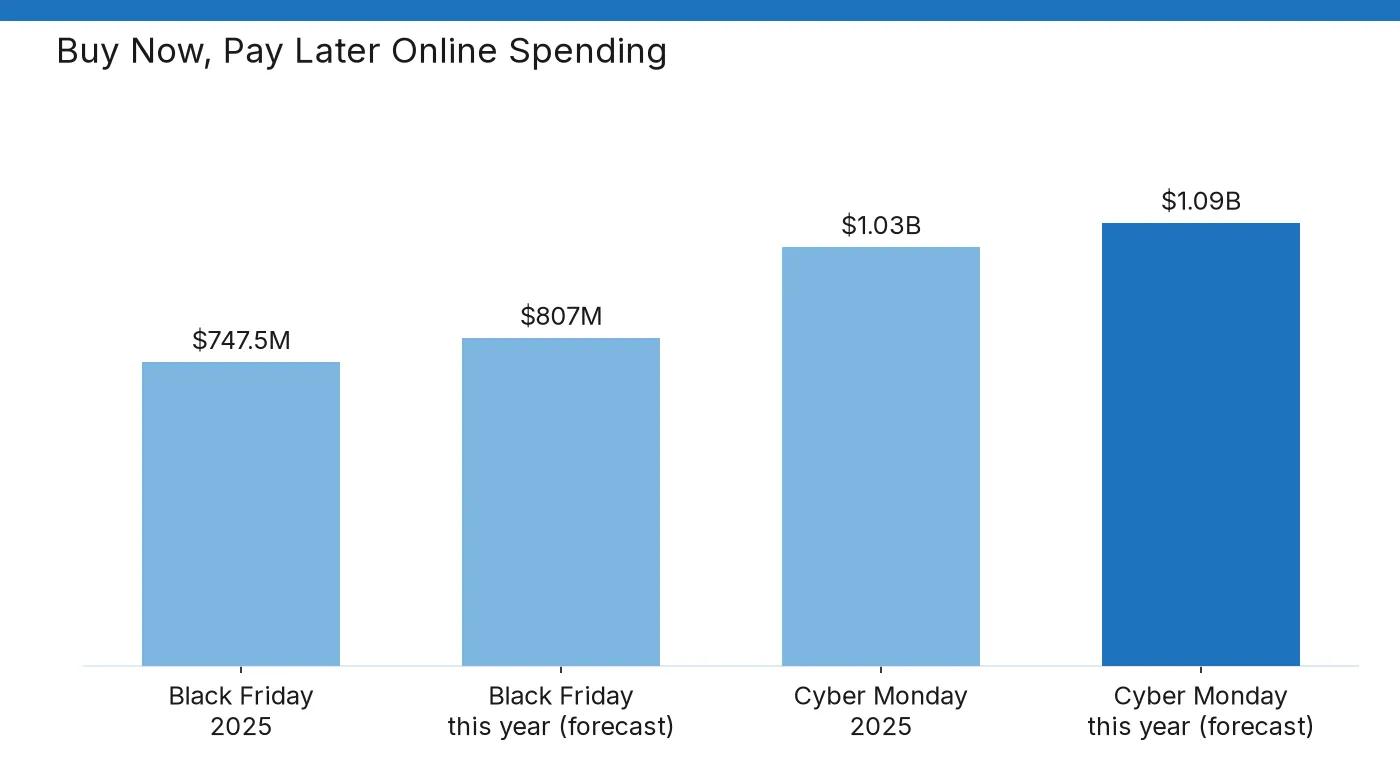
Buy now, pay later accounted for $747.5 million in US online spending on Black Friday 2025, up 8.9%.
That was about 6.3% of all online sales that day, and 80.7% of those purchases were made on phones. Cyber Monday crossed $1 billion in pay later spending for the first time, and the whole season reached $20 billion, up 9.8%.
| Pay later spending | 2025 | 2026 forecast |
|---|---|---|
| Holiday season | $20 billion | $21.3 billion |
| Cyber Monday | $1.03 billion | $1.09 billion |
| Black Friday | $747.5 million | $807 million |
What this means: Black Friday statistics on pay later show splitting payments has become a normal way to buy bigger items during the sales, and it keeps growing year after year.
How Big Are Black Friday Discounts?
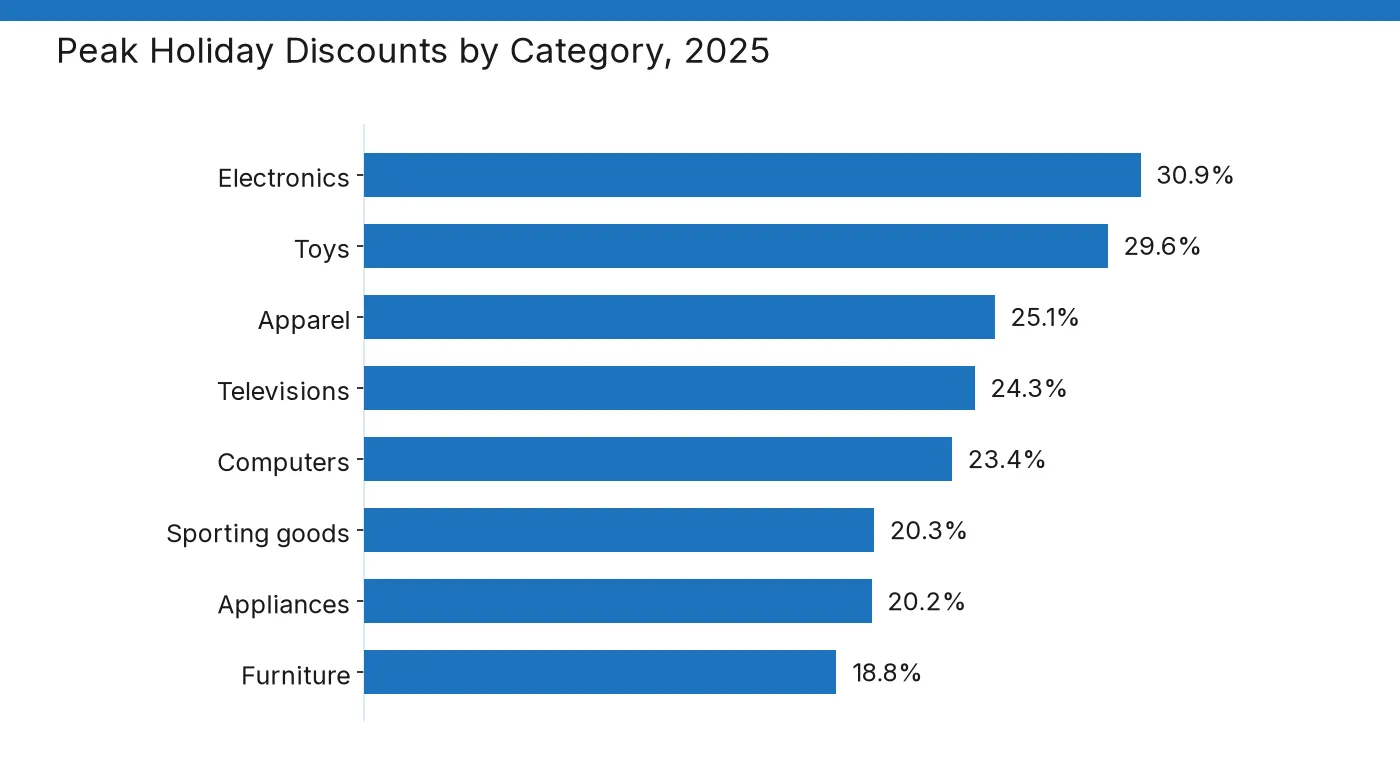
Black Friday statistics show electronics had the deepest holiday discounts last season, peaking at 30.9% off list prices.
Other Black Friday statistics on deals show toys at 29.6%, then apparel at 25.1% and televisions at 24.3%. This year, discounts are expected to reach up to 30% during Cyber Week, and the best prices on TVs, toys, apparel, appliances and furniture should land on Black Friday itself.
| Category | Peak discount, 2025 season |
|---|---|
| Electronics | 30.9% |
| Toys | 29.6% |
| Apparel | 25.1% |
| Televisions | 24.3% |
| Computers | 23.4% |
| Sporting goods | 20.3% |
| Appliances | 20.2% |
| Furniture | 18.8% |
Software and online tools run their own sales at the same time, so if you plan to open a store before the rush, check the current Shopify coupon code first.
What this means: Black Friday statistics on discounts show the deepest savings sit in electronics and toys, so those are the items worth waiting for.
How Is AI Changing Black Friday Shopping?
Traffic to US retail sites from AI chat tools rose 805% on Black Friday 2025.
Shoppers who arrived from an AI tool were 38% more likely to buy than other visitors. Across the globe, AI and shopping agents shaped about 20% of Cyber Week orders, worth $67 billion. Our AI chatbot statistics show how quickly these assistants have become part of daily life.
| AI shopping measure | Figure |
|---|---|
| AI influenced Cyber Week sales, 2026 forecast | $75.8 billion |
| AI influenced Cyber Week sales, 2025 | $67 billion |
| Rise in AI traffic on Black Friday 2025 | 805% |
| Holiday shoppers planning to use AI this weekend | 59% |
Social platforms play a bigger part too. Social media brought in 3.4% of online sales on Black Friday 2025, up 54.5%, and our YouTube statistics show how much product discovery now happens on video.
What this means: Black Friday statistics on AI show these tools have moved from a curiosity to a normal part of how people compare deals, and this year will push that further.
What to Expect From Black Friday in 2026
Black Friday statistics for 2026 point to record online sales of $12.9 billion, even with fewer people planning to shop over the weekend.
Shoppers are careful with money. 82% say they are taking steps to manage holiday costs, such as buying cheaper gifts or shopping for fewer people. Gift card plans are at their lowest level in more than 20 years, with 39% planning to give them, and debit cards stay the top way to pay at 40%.
| Shopper plans this year | Share |
|---|---|
| Taking steps to manage holiday costs | 82% |
| Started shopping by early November | 60% |
| Plan to use AI over Thanksgiving weekend | 59% |
| Say the deals are too good to pass up | 48% |
| Plan to give gift cards | 39% |
What this means: Black Friday statistics for this year point to more spending per order, more AI help and more deals spread across the month, with Black Friday still at the center.
Did you know? Independent brands on one large commerce platform sold a record $14.6 billion over the 2025 Black Friday Cyber Monday weekend, up 27%. See the full numbers in our Shopify statistics.
Pros & Cons: Black Friday Statistics
Pros
- US online sales on Black Friday hit a record $11.8 billion in 2025.
- Peak discounts reached 30.9% on electronics and 29.6% on toys.
- Black Friday draws the most shoppers of the holiday weekend, online and in stores.
- Online sales on the day have more than tripled in ten years.
- Pay later options gave shoppers more room, with $747.5 million spent this way on Black Friday 2025.
- AI shopping tools now help people compare prices before they buy.
Cons
- Many deals start weeks early, so the day itself is less special than it used to be.
- Planned turnout for Thanksgiving weekend is down this year, at 182.7 million.
- Big crowds online and in stores can mean sold out items and slow delivery.
Our verdict: Black Friday statistics show the day is still worth planning for. Shoppers get the year’s deepest cuts on electronics and toys, and sellers get their biggest crowd, if their store works well on phones.
Quick Links:
- Shopify Statistics
- AI Chatbot Statistics
- YouTube Statistics
- SEO Statistics
- Voice Search Statistics
- AI Image Generation Statistics
- YouTube vs TikTok Statistics
- GTA 6 Statistics
FAQs: Black Friday Statistics
US shoppers spent a record $11.8 billion online on Black Friday 2025, up 9.1% from $10.8 billion a year earlier. At the busiest point of the day, people spent about $12.5 million every minute. Worldwide online sales on Black Friday reached about $79 billion, up 6%.
US online sales on Black Friday are forecast to reach $12.9 billion this year, up 9.2%. That would make it the second biggest online shopping day of the season after Cyber Monday, which is forecast at $15.1 billion. Black Friday is expected to grow faster than Cyber Monday again.
In 2025, 85.7 million Americans shopped online on Black Friday and 80.3 million shopped in stores, which kept it the busiest day of the holiday weekend. This year, 126 million people plan to shop on Black Friday, or 69% of everyone planning to shop over Thanksgiving weekend.
A record 202.9 million people shopped from Thanksgiving Day through Cyber Monday in 2025, up from 197 million the year before. Online shoppers reached 134.9 million, up 9%, while 129.5 million shopped in stores, up 3%. This year, 182.7 million people plan to shop that weekend.
Shoppers spent an average of $337.86 on holiday items over Thanksgiving weekend in 2025, up from $315.56 the year before. That was the highest figure since 2019. About 67% of that money, or $225.74, went on gifts, with clothing and toys at the top of most lists.
Electronics carry the deepest holiday discounts, which peaked at 30.9% off list prices last season. Toys followed at 29.6%, then apparel at 25.1%, televisions at 24.3% and computers at 23.4%. This year, the best deals on TVs, toys, apparel, appliances and furniture are expected to land on Black Friday itself.
Phones made up 55.2% of US online sales on Black Friday 2025, or about $6.5 billion, up 10.2%. Across the whole holiday season, mobile reached 56.4% of online spending. Globally, phones handled about 70% of online orders during Cyber Week, and mobile wallets paid for 27% of them.
Traffic to US retail sites from AI chat tools jumped 805% on Black Friday 2025, and those visitors were 38% more likely to buy. AI and shopping agents shaped about 20% of global Cyber Week orders, worth $67 billion. This year, 59% of holiday shoppers plan to use AI over Thanksgiving weekend.
Conclusion: Black Friday Statistics 2026 in Numbers
Black Friday statistics for 2026 come down to three figures: US shoppers spent a record $11.8 billion online on Black Friday 2025, 202.9 million people shopped over the long weekend, and online sales on the day are forecast to reach $12.9 billion this year. With phones, pay later and AI tools all growing, expect Black Friday to keep closing the gap on Cyber Monday.
