
Udacity Review 2026: Is It Worth It?
Udacity Review searches usually lead to one big question: is Udacity worth paying for when there are so many online learning platforms available? After looking at its current course catalog, subscription model, project-based format, career resources, pricing, and learning experience, Udacity stands out most for people who want to build practical technology skills rather than simply watch video lessons.
Udacity delivers online education through project-centric Nanodegree programs and complimentary introductory courses spanning AI, software development, cloud infrastructure, data analytics, and full-stack web technologies. Educational experiences incorporate professional mentor evaluation, collaborative learning communities, corporate partnerships with industry leaders including Google and Amazon, and industry-recognized certifications. Cost structure ranges from no-cost entry courses to premium subscriptions between $300 and $1,500 monthly, with promotional discounts reaching 55% off available periodically.
Pros
- Professional evaluation of capstone projects combined with personalized mentor guidance creates job-ready portfolio materials reflecting authentic professional standards.
- Industry-recognized certification credentials deliver meaningful employment advantage compared to generic completion certificates from alternative platforms.
- Instructional content co-developed with Fortune 500 technology organizations ensures curricula alignment with current marketplace skill requirements.
- Collaborative community infrastructure paired with accessible mentorship structures sustain learner engagement and eliminate the disconnection typical of self-paced distance learning.
- Published case studies documenting successful career transitions validate program effectiveness and demonstrate tangible post-completion employment outcomes.
Cons
- Premium subscription costs spanning $300 to $1,500 monthly represent substantial financial investment even after applying available promotional discounting strategies.
- Predetermined course sequences and mandatory project progression eliminate flexibility for customized learning paths tailored to individual knowledge gaps.
Udacity now uses an All Access subscription. Individual learners can access the platform for $249 per month, or choose the four-month option for $846 upfront, which saves 15% compared with four standard monthly payments. The four-month discount applies to the first four months, after which the subscription changes to monthly billing unless you cancel.
The platform covers artificial intelligence, machine learning, programming, data science, cloud computing, cybersecurity, product management, digital marketing, and other technology-focused subjects.
What makes Udacity different is its focus on projects, personalized project feedback, career services, and Nanodegree programs. The catch is equally clear: $249 per month is expensive compared with many competing online learning services.
So, does the learning experience justify the price?
Let’s take a closer look.
Udacity Review at a Glance
Get a fast snapshot of Udacity’s core features, pricing structure, program types, mentorship quality, and overall value proposition in this comprehensive Udacity review for learners evaluating online education platforms.
Category | Rating |
|---|---|
Course quality | 4.7/5 |
Hands-on projects | 4.8/5 |
Subject coverage | 4.6/5 |
Ease of use | 4.5/5 |
Career resources | 4.6/5 |
Pricing | 3.8/5 |
Beginner friendliness | 4.2/5 |
Advanced technical learning | 4.8/5 |
Overall | 4.5/5 |
Our verdict: Udacity is a strong choice for learners who want structured, project-based technology education and plan to use the subscription regularly. The price is harder to justify for casual learners who only need a short course.
What Is Udacity?
Udacity is an online education platform that began with a free artificial intelligence course created by Stanford instructors Sebastian Thrun and Peter Norvig.
The company has since developed into a large technology-focused learning platform. Udacity says it has reached more than 16.9 million registered users, with learners in more than 240 countries. Its current catalog includes nearly 100 Nanodegree programs and individual courses, with more than 15,000 hours of catalog content.
Its focus is not general education.
You will not find Udacity trying to compete with broad course marketplaces across every hobby and subject. Instead, its catalog centers on skills that connect closely with technology and professional work.
That focus is one of the platform’s biggest strengths.
How Udacity’s All Access Model Works
Udacity changed its subscription model in 2023.
Previously, learners selected individual Nanodegree programs or courses and paid separately. The current All Access model gives subscribers access to the entire catalog while their subscription remains active.
That means you can start one Nanodegree and then take a separate course to fill a knowledge gap without buying another program.
For example, someone working through a Product Manager program might discover that they need more SQL knowledge. With an active subscription, they can move into an SQL course without paying another program fee.
This setup is useful for learners who have several related skills to develop.
It is less appealing if you only want to learn one small topic and leave.
What Can You Study on Udacity?
Explore all learning subjects available on Udacity including AI, machine learning, programming, cloud computing, data science, web development, autonomous systems, and business skills in this detailed Udacity review.
1. Artificial Intelligence
AI is one of the platform’s strongest areas.
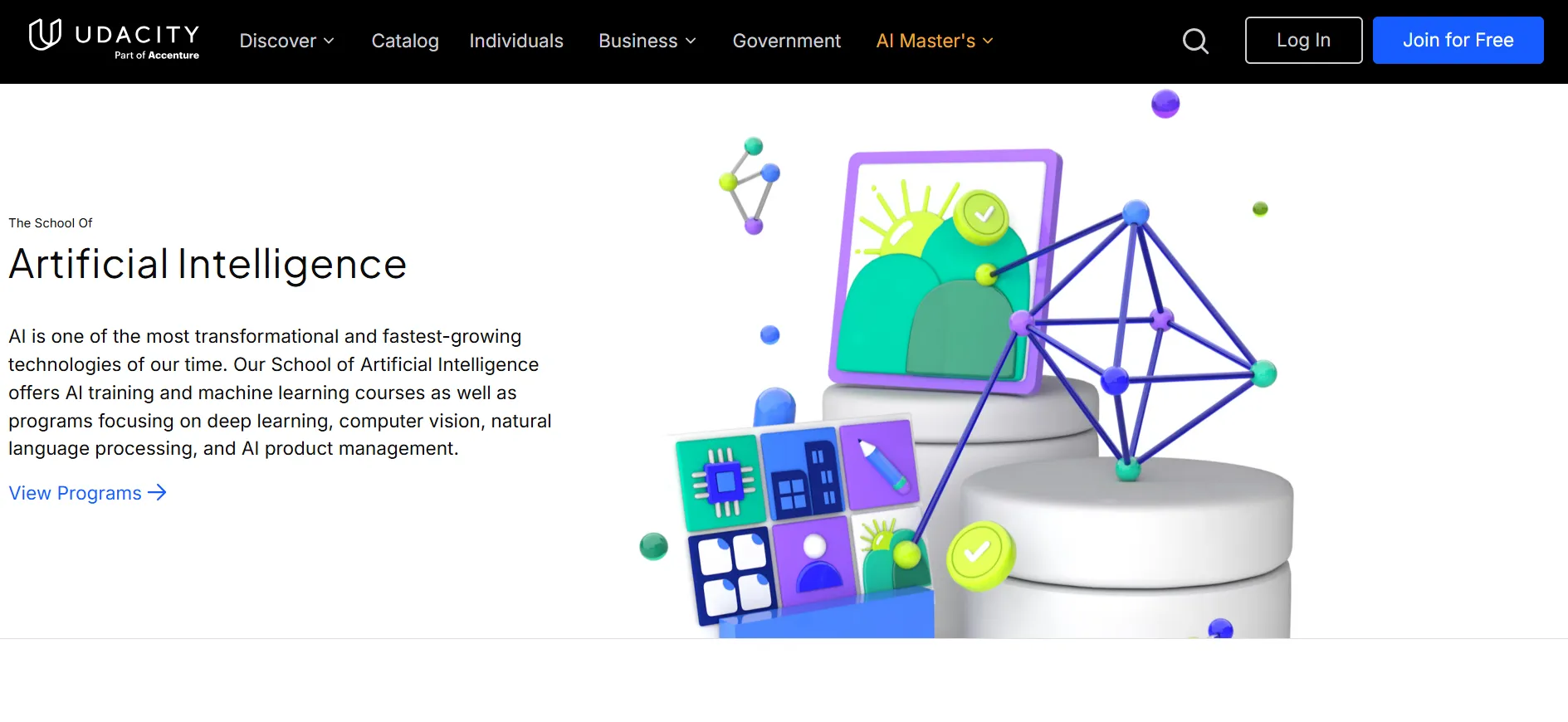
Current learning options include topics such as:
Generative AI
Agentic AI
AI Programming with Python
Deep Learning
Machine Learning
AI Product Management
AWS Machine Learning
Natural Language Processing
The current Agentic AI Nanodegree is especially relevant to learners interested in AI agents, Python, APIs, databases, and multi-agent systems.
Udacity’s current free-trial terms also use the Agentic AI Nanodegree for its seven-day trial promotion.
2. Data Science
Data-focused learners can study:

Data analysis
Data science
Data engineering
Business analytics
SQL
Python
Data visualization
Machine learning
The range makes Udacity useful for someone moving from basic programming toward more advanced data work.
3. Programming
Udacity has long been associated with technical programming education.
Its catalog includes Python, C++, web development, programming fundamentals, and other development subjects.
Beginners can start with introductory material, while experienced developers can move into more advanced programs.
4. Cloud and DevOps
Cloud computing and DevOps are also well represented.
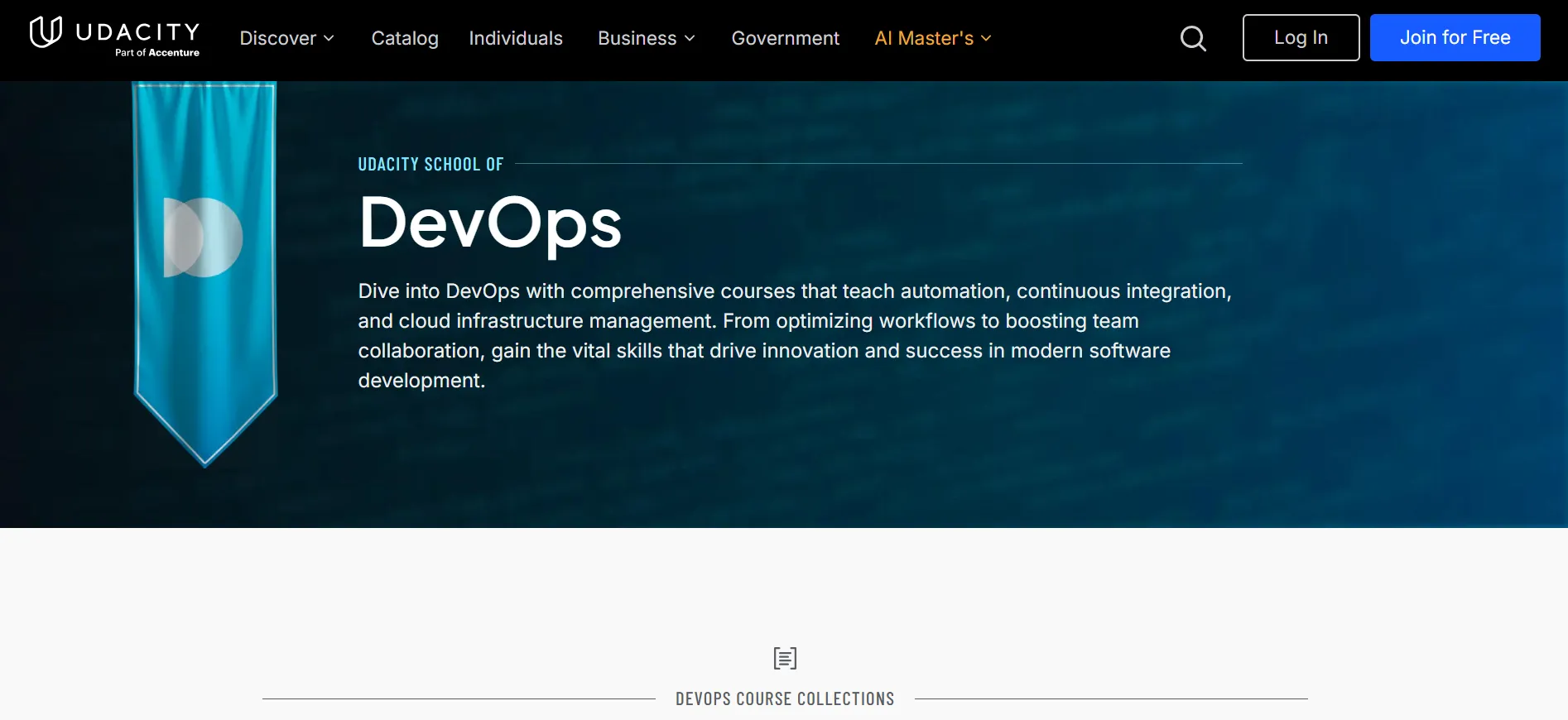
Learners can find AWS-related programs and courses covering cloud architecture, data engineering, infrastructure, and development workflows.
5. Product Management and Digital Marketing
Udacity is not exclusively for programmers.
The platform also includes product management, AI product management, digital marketing, business analytics, and related subjects.
This makes the subscription more useful for professionals whose work sits between technology and business.
The Biggest Strength: Hands-On Projects
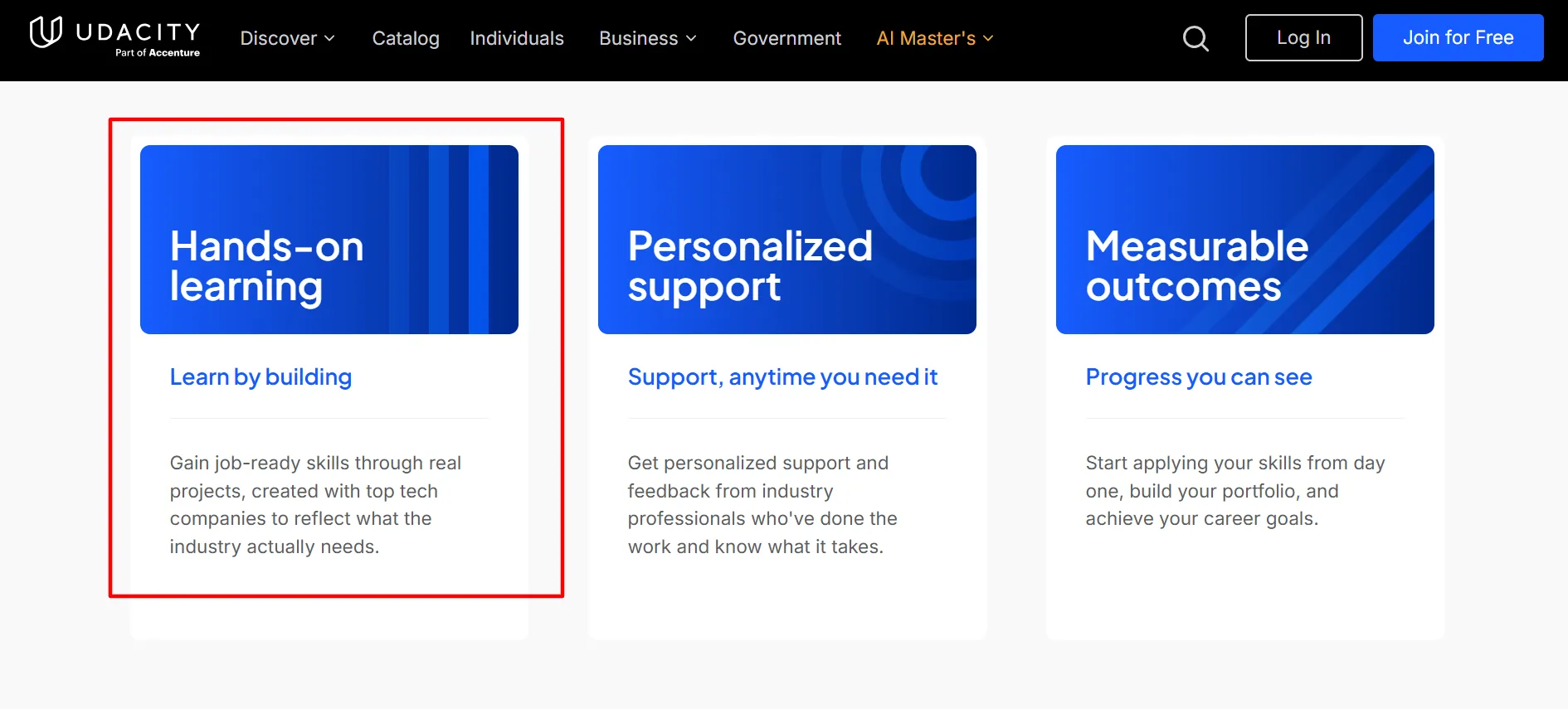
The strongest part of Udacity, in our view, is its emphasis on practical work.
Many online courses follow a familiar pattern:
Watch a video.
Take a quiz.
Watch another video.
Take another quiz.
Udacity takes a different route with its Nanodegree format.
Programs include hands-on projects, personalized project reviews, and career resources. Udacity says Nanodegrees are project-based learning experiences built around workplace skills.
That matters because technical skills are easier to judge when you actually build something.
A learner studying data science, for example, can work with datasets instead of only reading about data analysis.
A programming student can build projects.
An AI learner can work on applications and workflows rather than simply memorizing terminology.
The projects also give learners material they can discuss when applying for jobs or speaking with potential clients.
How Good Is Udacity for Beginners?
Udacity can work for beginners, but it is not equally beginner-friendly across every program.
Some introductory courses start from the basics. Others expect you to have programming, mathematics, business, or technical knowledge before starting.
This is one area where you need to read the program requirements carefully.
If you are completely new to technology, jumping directly into an advanced machine learning program is unlikely to be a pleasant experience.
A better route is to begin with an introductory programming or AI course, build your foundation, and then move into a larger Nanodegree.
Udacity’s course descriptions generally indicate the expected skill level, so use those details before enrolling.
Udacity Learning Experience
Udacity’s classroom experience is designed around self-paced online study.
You can work through lessons when your schedule allows, complete projects, and move between programs under the same subscription.
This works well for professionals who cannot attend fixed classes.
The project structure also gives the learning process more direction than simply browsing a huge library of unrelated videos.
Another useful feature is the ability to move between courses. Since the All Access subscription covers the full catalog, you do not have to decide that your entire learning plan must fit inside one Nanodegree.
You can add individual courses when you need them.
Project Feedback and Mentorship
Udacity puts considerable attention on feedback.
Its current subscription page lists hands-on projects with expert feedback, personalized career coaching, and interview preparation among the subscription benefits.
Its support documentation also says learners can receive personalized project reviews and around-the-clock support.
This can make a difference when you get stuck.
A recorded lecture cannot tell you why your project is failing. Project feedback can point out problems in your work and give you a clearer direction for fixing them.
That human feedback is one reason Udacity costs more than many simple video-course platforms.
Career Support
Udacity also tries to connect learning with career development.
Current subscription benefits include:
Personalized career coaching
Interview preparation
Career resources
Program certificates
Hands-on projects
Project feedback
This makes the platform more appealing to career changers and professionals than to people learning purely for entertainment.
Still, a certificate is not a guarantee of employment.
Your portfolio, technical ability, work history, interview performance, and job market all matter. Udacity can help you build skills and projects, but it cannot promise a job.
Udacity Pricing Review
Pricing is probably the biggest weakness in this Udacity review.
The current individual subscription costs:
Subscription | Price | Effective Monthly Cost |
|---|---|---|
Monthly | $249/month | $249 |
Four months | $846 upfront | $211.50 |
The four-month package saves $150 compared with paying $249 each month for four months.
Udacity says the discount applies to the first four months, after which the subscription converts to month-to-month billing.
For someone completing a Nanodegree over several months, this pricing can make sense.
For a casual learner, it is a much harder sell.
At $249 per month, Udacity is asking you to make education a serious part of your monthly budget.
The platform’s broad catalog helps justify the price, but only if you actually use it.
Is the Four-Month Plan Worth It?
If you already know that you will study for four months, the answer is usually yes.
Four monthly payments would total:
$249 × 4 = $996
The prepaid bundle costs:
$846
That means you save:
$150
The effective monthly cost becomes $211.50.
There is one thing to remember. You pay the full bundle upfront.
Udacity’s support documentation says the seven-day refund period begins when you purchase a subscription bundle. After that period, there are no partial refunds for ending the fixed multi-month term early.
So the four-month plan is best for someone with a clear study schedule.
Does Udacity Offer a Free Trial?
Udacity currently offers a seven-day trial of the Agentic AI Nanodegree to eligible users.
This is not a general free trial of every course in the catalog.
The current terms say users need a valid payment method. Udacity places a temporary $10 authorization hold to verify the payment method. The hold is not a charge and should be released by the user’s financial institution according to its policies.
If you do not cancel before the trial ends, the subscription automatically converts to a paid monthly All Access subscription at the price shown when you start the trial.
The current promotion is also void in India and may be restricted by other eligibility rules.
If you see a trial offer on your account, read the terms shown at signup before entering your payment information.
Does Udacity Have Free Courses?
Yes.
Udacity offers free courses and other free learning content.
This is useful because you can test the platform without immediately committing to the $249 monthly price.
Free courses can also help you decide whether you like Udacity’s lesson format before starting a full Nanodegree.
If you are completely new to Udacity, this is one of the easiest ways to reduce the risk of paying for something you may not use.
Pros and Cons: Udacity Review
Pros
- Strong technology focus: AI, programming, data, cloud, and other technical areas receive major attention.
- Project-based learning: Many programs require practical work rather than only quizzes.
- Expert project feedback: Eligible learning paths include personalized project reviews.
- All Access catalog: One subscription gives access to the wider catalog.
- Career resources: Coaching and interview preparation are included with the current subscription.
Cons
- High monthly price: $249 is expensive compared with many online learning services.
- Upfront commitment: The four-month option requires $846 upfront.
Udacity vs. Other Online Learning Platforms
Udacity is best compared with platforms based on your learning goal, not just price.
If you want thousands of inexpensive individual courses on almost any subject, a large course marketplace may suit you better.
If you want university-backed courses across many academic subjects, another platform may be a better fit.
Udacity is more specialized.
Its strength is career-oriented technology education with projects and feedback.
That makes it a better match for someone who wants to build a portfolio or develop skills for a technical role.
The higher subscription price becomes easier to justify when you use several courses and complete a full Nanodegree.
Who Should Use Udacity?
Discover whether Udacity fits your learning needs in this breakdown of ideal candidates including career changers, professionals seeking credentials, tech companies training employees, and students wanting hands-on project experience in this comprehensive Udacity review.
1. Career Changers
If you are moving into technology from another field, a structured Nanodegree can give you a learning path instead of forcing you to assemble dozens of unrelated courses.
2. Developers
Developers can use Udacity to learn new programming languages, AI tools, cloud technologies, and related skills.
3. Data Professionals
People working with data can study Python, SQL, analytics, data engineering, and machine learning.
4. AI Learners
Udacity has a strong selection of AI-related programs, making it one of the better choices for learners who want to go beyond basic AI concepts.
5. Professionals With a Clear Goal
The subscription works best when you know what you want to learn and have enough time to study regularly.
Who Should Skip Udacity?
Udacity may not be the right choice if:
You only want one short course.
Your budget is very limited.
You prefer buying courses once and keeping access permanently.
You do not have enough time to study consistently.
You want courses across a very broad range of hobbies and academic subjects.
You are looking only for casual learning.
For these learners, the $249 monthly subscription may be difficult to justify.
Is Udacity Worth It?
Yes, for the right learner.
Udacity is worth considering if you want structured technology education, practical projects, expert feedback, and career-focused resources.
Its All Access model is especially useful for people who want to build several connected skills. You can work through a Nanodegree and then take individual courses to fill gaps without purchasing another program.
The main concern is price.
At $249 per month, Udacity is not a casual subscription. You need to use the platform regularly to get your money’s worth.
The four-month option improves the equation by reducing the effective cost to $211.50 per month, but you still need to commit $846 upfront.
Quick Links:
Final Verdict: Udacity Review
After looking at the current catalog, projects, feedback, career resources, pricing, and subscription model, Udacity earns 4.5 out of 5 in this review.
Its biggest strength is the combination of technical courses and practical project work. The platform is built for people who want to do something with what they learn, not simply collect completion badges.
The All Access model is another strong point. You can move between Nanodegrees and individual courses while keeping one subscription, which gives experienced learners room to build a learning plan around their actual goals.
The price remains the biggest drawback.
At $249 per month, Udacity costs enough that you should have a clear reason for subscribing. If you plan to study consistently and complete a Nanodegree, the cost can be easier to justify. The $846 four-month plan is even more appealing when you know you will use the platform for the full four months.
For someone serious about AI, machine learning, programming, data science, cloud computing, DevOps, or other technology careers, Udacity is worth a closer look.
For casual learners, free courses or a lower-cost learning platform may be a better fit.
Our final take: Udacity is worth it when you treat it as a serious skill-building program rather than a casual course library.
