
Moz Review 2026: Pricing, Features And More
Choosing an SEO tool can get expensive when you pay for keyword research, rank tracking, backlink analysis, and website audits separately. Moz aims to bring many of these tasks together in one place, giving website owners and marketing teams a way to research search terms, monitor rankings, find technical issues, and measure their site’s SEO progress.
Moz is an SEO software suite for keyword research, rank tracking, site audits, and link analysis. It serves small businesses, agencies, and enterprise marketing teams.
Pros
- Trusted keyword and domain metrics used across the SEO industry.
- Clear site audits that flag technical issues fast.
- Rank tracking covers multiple sites and keywords.
- Free tools let you research without paying.
- Beginner-friendly interface suits teams new to SEO.
Cons
- Higher tiers get expensive for larger teams.
- Keyword data can differ from other SEO tools.
But is Moz worth paying for when tools such as Semrush and Ahrefs are also available? That depends on your website, your SEO goals, and how much data you need each month.
In this Moz review, we’ll look at the platform’s main features, pricing, ease of use, strengths, weaknesses, and the type of user who may benefit most from it. We’ll also cover its free tools and explain when it makes sense to consider a paid subscription.
What Is Moz?
Moz is an SEO software company known for tools that help businesses improve their visibility in organic search results. Its product range includes Moz Pro, Moz Local, and other resources for keyword research, link analysis, local search management, and website performance.
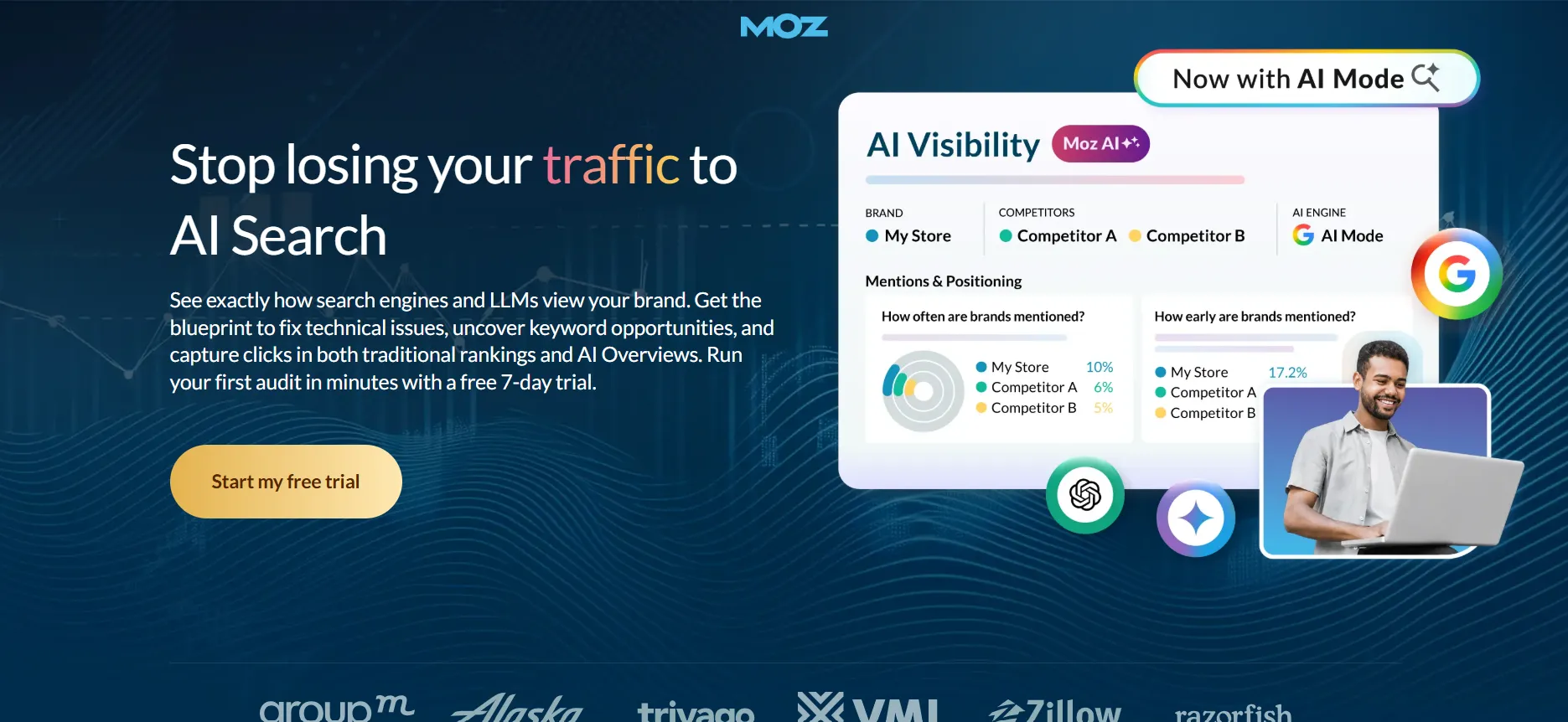
Moz Pro is the product most people mean when they talk about Moz as an SEO platform. It combines several tools that help you research keywords, track search rankings, review backlinks, and discover technical SEO issues. Its newer features also cover visibility in AI-powered search experiences.
One of Moz’s best-known metrics is Domain Authority (DA). This score estimates the relative ranking strength of a website based on its link profile and other data. SEO professionals often use it to compare websites or assess potential link opportunities.
Keep in mind that Domain Authority is a Moz metric, not a Google ranking factor. A higher score doesn’t guarantee better rankings, and a site with a lower score can still perform well for the right search terms.
Moz is designed for a broad audience, including bloggers, small business owners, in-house SEO teams, freelancers, and agencies. The main difference between these users is how much data they need and how many websites they manage.
Moz Pricing: How Much Does It Cost?
Moz Pro has a Starter option, three main self-service plans, and an Enterprise offering for businesses with larger requirements. The published prices below are in US dollars.
Plan | Monthly billing | Annual billing rate | Best suited for |
|---|---|---|---|
Starter | $49/month | Check at signup | Individuals managing one website |
Standard | $99/month | $79/month | Small businesses and solo marketers |
Medium | $179/month | $143/month | Growing businesses and small teams |
Large | $299/month | $239/month | Larger teams and multi-site projects |
Enterprise | Custom | Custom | Organizations with specialized needs |
Annual billing lowers the effective monthly rate on Standard, Medium, and Large. Moz lists the first-year annual payments as $950 for Standard, $1,719 for Medium, and $2,868 for Large. Since the advertised monthly equivalents are rounded, check the amount shown at checkout before paying.
Moz Starter
Starter costs $49 per month and is intended for people managing a single website. It may be enough for an individual blogger, freelancer, or small business that needs more SEO data than the free tools provide but doesn’t require the larger limits of Moz Pro’s main plans.
Before buying, review the exact keyword, crawl, and research limits attached to Starter. The entry-level plan doesn’t automatically include the same capacity as Standard or Medium.
Moz Standard
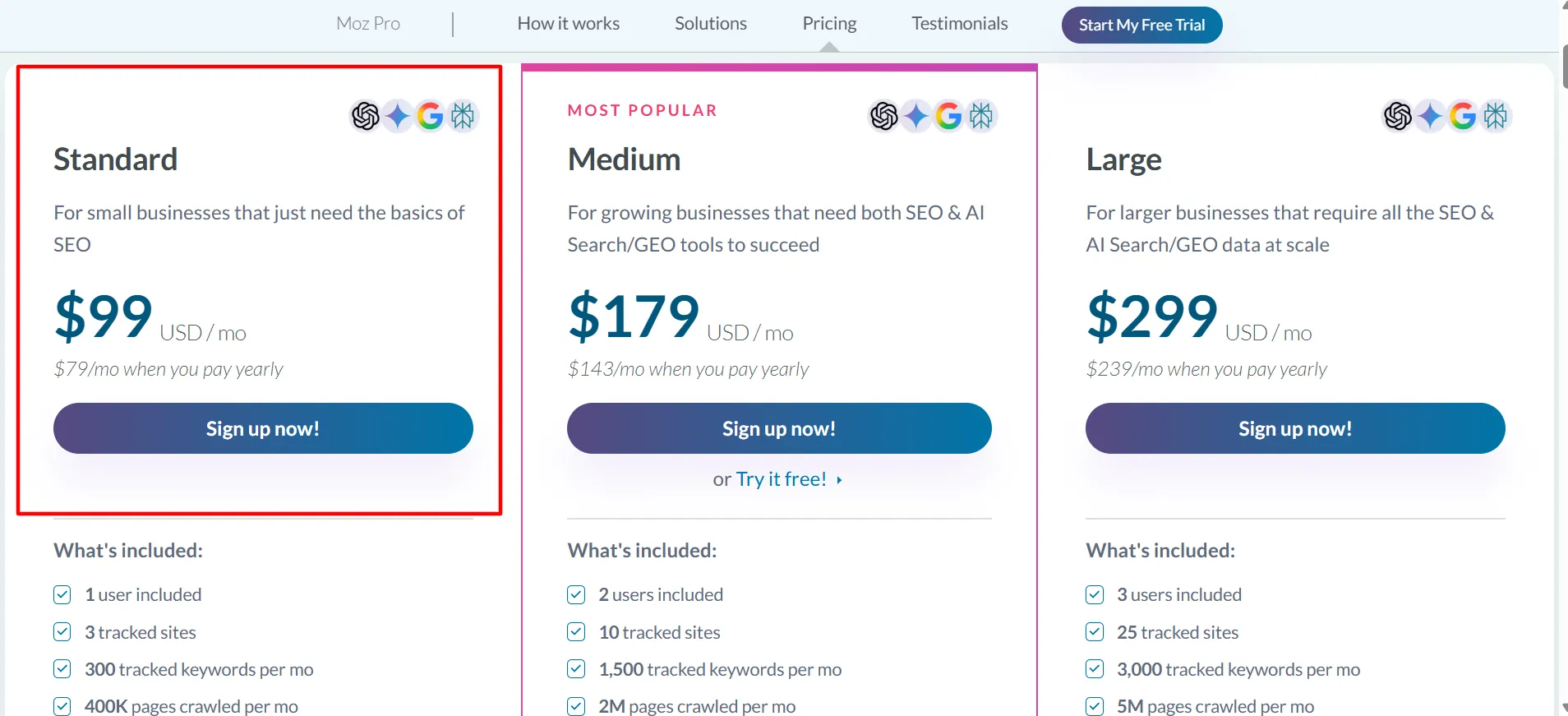
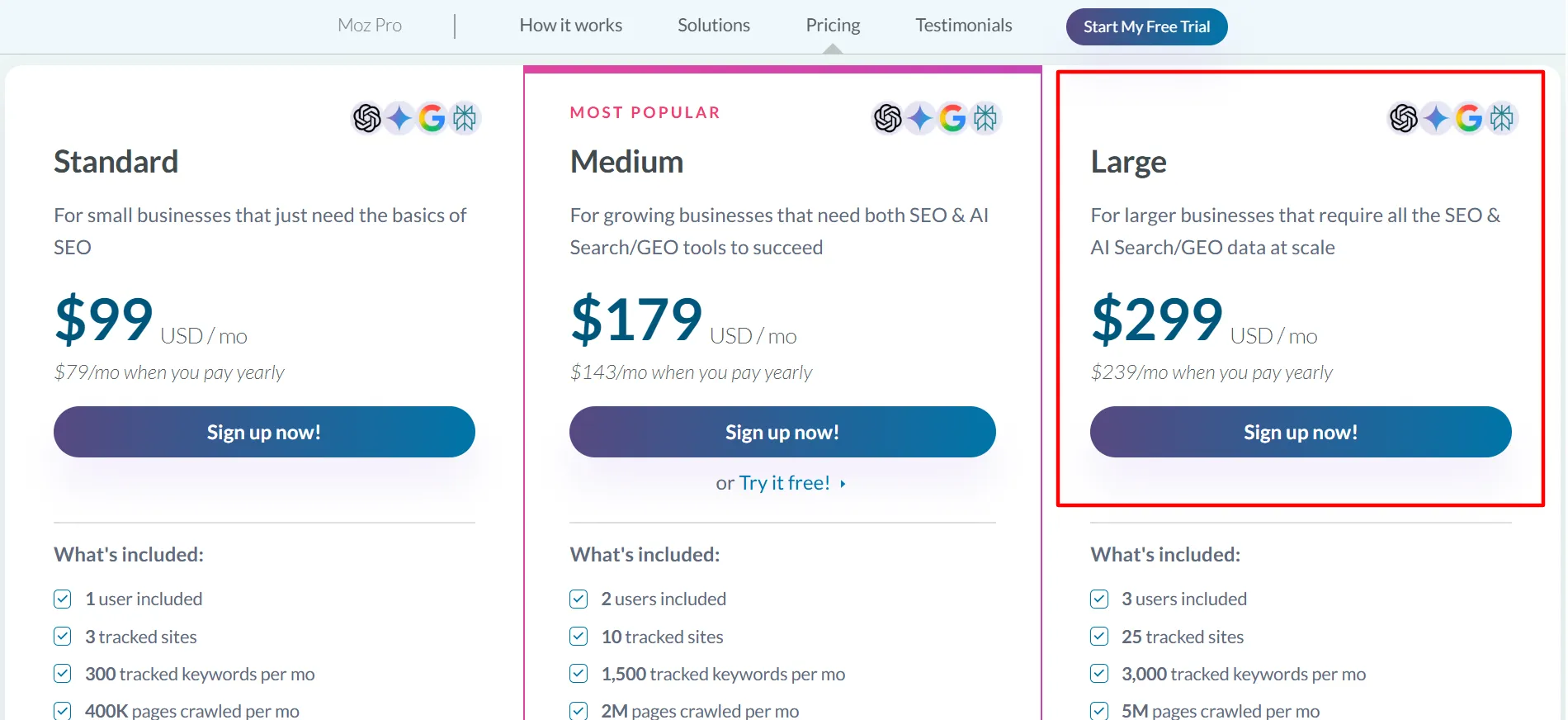
Standard costs $99 per month, or an effective $79 per month with annual billing. The listed annual payment is $950 for the first year. It includes one user, three tracked sites, 300 tracked keywords per month, and up to 400,000 pages crawled per month.
This plan is a reasonable starting point for small businesses and solo SEO professionals. It provides room to monitor a few websites and keep track of a focused set of search terms.
Moz Medium
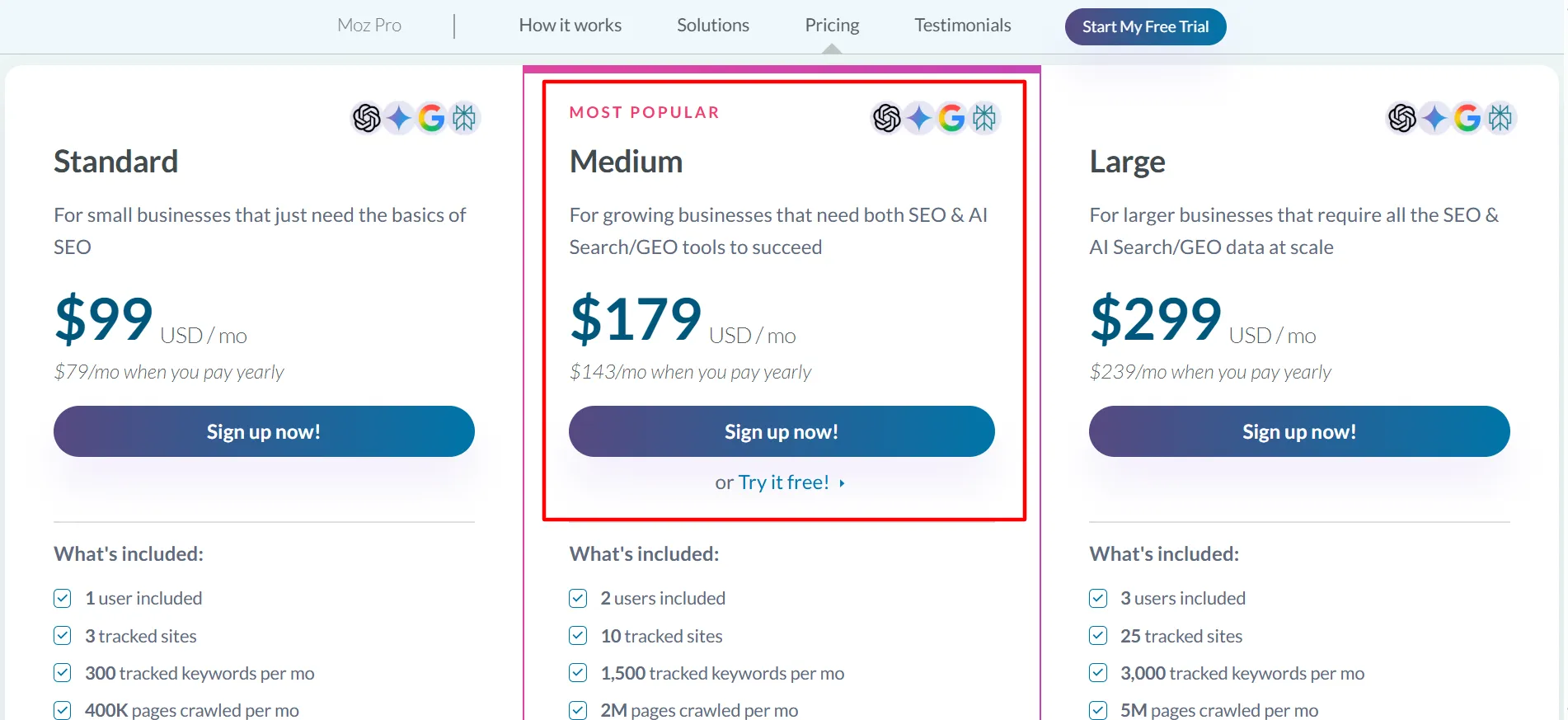
Medium costs $179 per month, or $143 per month with annual billing. Its listed first-year annual payment is $1,719. The plan supports two users, ten tracked sites, 1,500 tracked keywords per month, and up to two million pages crawled per month.
Medium is a stronger fit for growing businesses and teams managing several websites. It offers more room for research and monitoring, which can be useful when SEO work spans multiple campaigns.
Moz Large
Large costs $299 per month, or an effective $239 per month when billed annually. Moz lists the annual payment as $2,868 for the first year. It includes three users, 25 tracked sites, 3,000 tracked keywords per month, and up to five million pages crawled per month.
This plan is aimed at teams that need more tracking and crawling capacity. If you run a large content site or manage several client projects, the additional limits may be useful. A small website with a short keyword list probably won’t need this much capacity.
Moz Enterprise
Enterprise is intended for organizations with requirements that go beyond the standard plans. Moz doesn’t publish a fixed price for this option, so you’ll need to contact its sales team for a quote.
If you’re considering Enterprise, ask about user seats, tracked websites, data limits, reporting, onboarding, and contract terms. These details will help you compare the offer with a self-service plan or another SEO platform.
Moz Features: What Can You Do With It?
Moz Pro brings several SEO activities together. Here are the features worth examining before deciding whether the subscription fits your workflow.
1. Keyword Research With Keyword Explorer
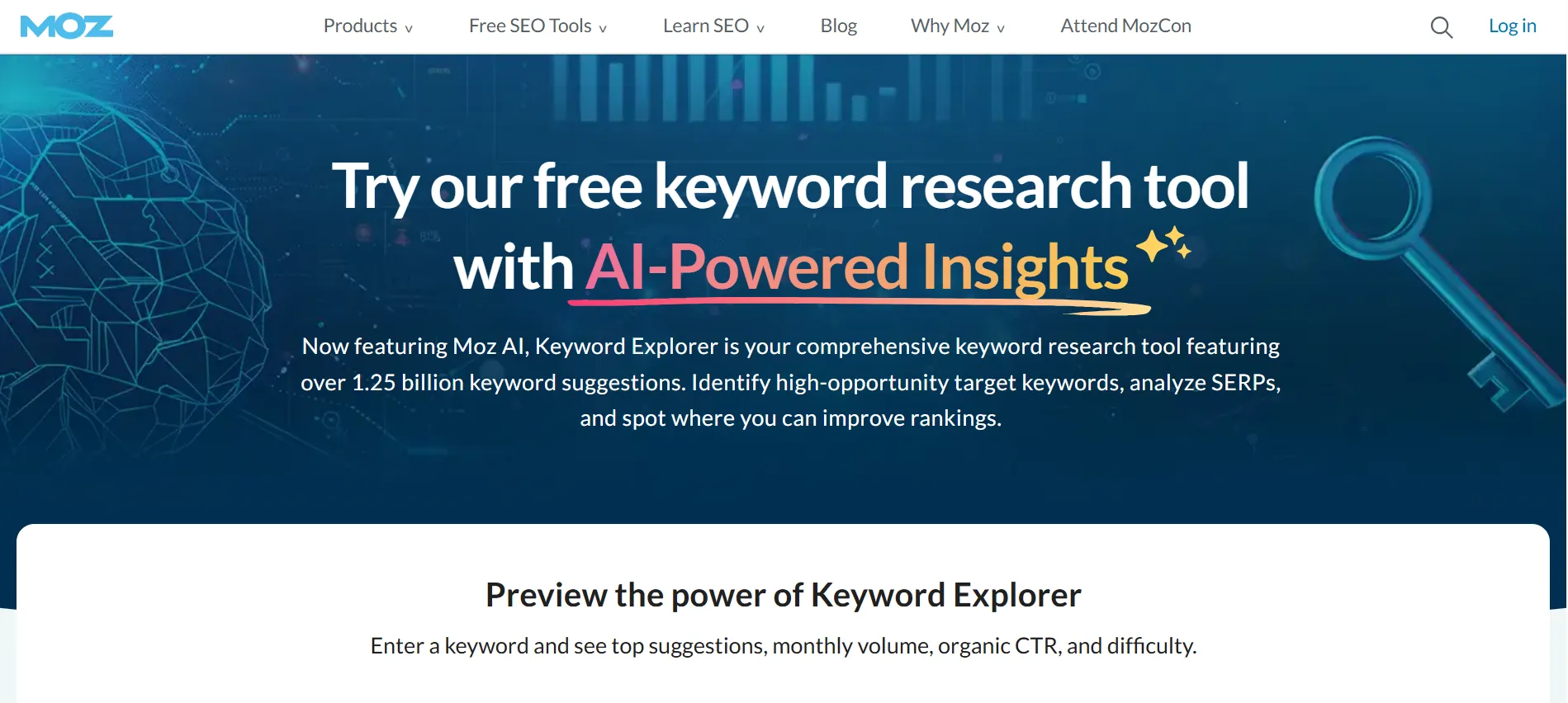
Keyword research helps you understand what people search for and which topics may be worth targeting. Moz’s Keyword Explorer helps users discover search terms, assess keyword difficulty, and compare opportunities before planning content.
For example, a company selling project management software might research phrases such as “project management tools for small teams” or “how to manage remote projects.” The results can help its marketing team choose blog topics, improve landing pages, and understand the language potential customers use.
Keyword research is most useful when you combine tool data with a clear understanding of your audience. A phrase with high search volume isn’t automatically the best choice. Search intent, competition, relevance, and the chance of turning visitors into customers matter too.
2. Rank Tracking
Publishing a page is only the start of an SEO campaign. You also need to monitor whether the page gains visibility for the search terms it targets.
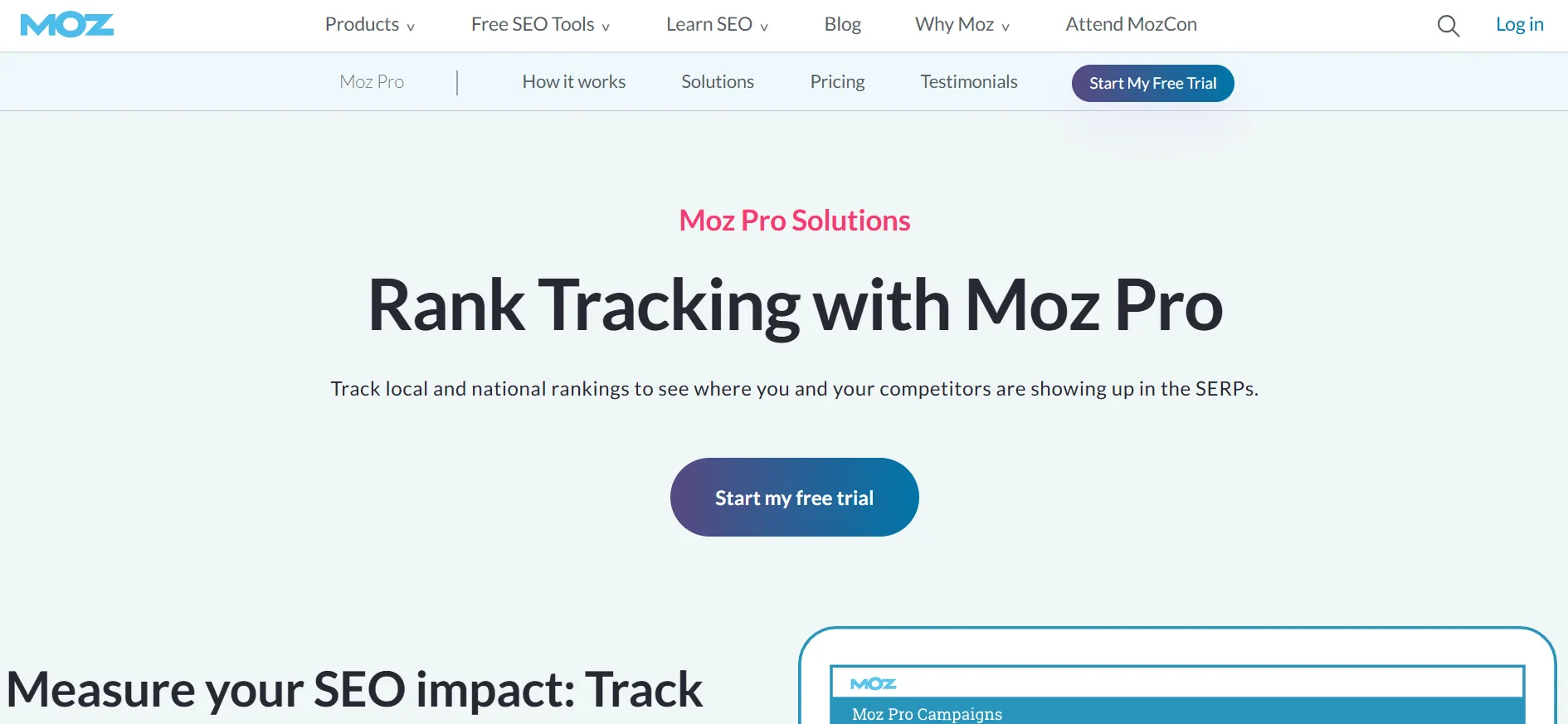
Moz’s rank tracking features help you follow selected keyword positions over time. This can show whether a page is gaining ground, losing visibility, or staying in roughly the same position. You can use those changes to decide which pages deserve another look.
Rankings can fluctuate for reasons outside your control, including changes in competitors’ content and search results. Review longer-term patterns rather than making major decisions based on one day’s movement. Where possible, compare ranking data with organic traffic, leads, and sales.
3. Site Crawling and Technical SEO
Technical problems can make it harder for search engines to crawl and understand a website. Broken links, redirect issues, duplicate pages, and other problems may affect how a site performs.
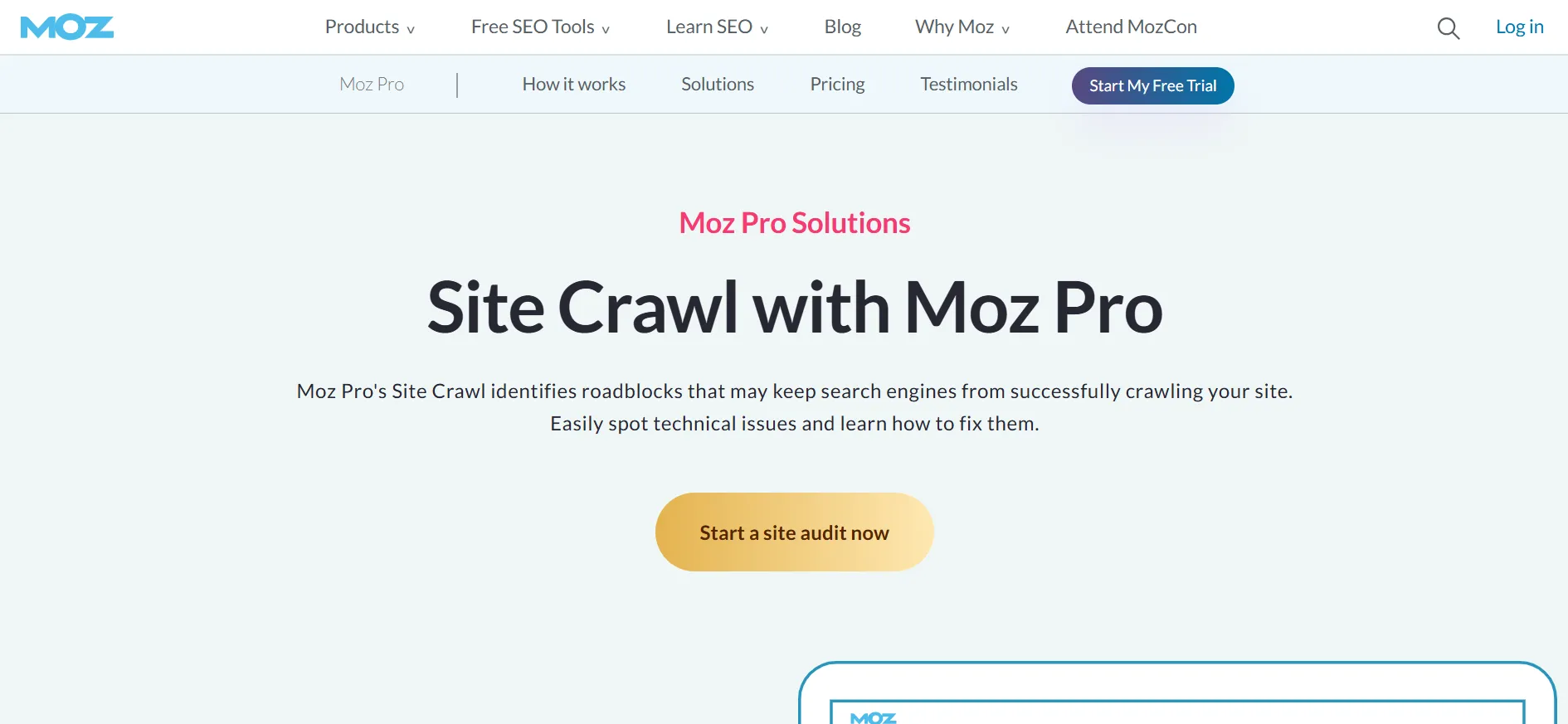
Moz Pro’s site crawling features help identify issues that need attention. The plan you choose affects how much of your website you can crawl, so larger websites should pay close attention to the limits before subscribing.
A crawl report is useful because it gives you a starting list of potential fixes. Still, not every warning deserves the same priority. Focus first on issues that affect important pages, internal linking, indexing, and the overall user experience.
4. Backlink Analysis With Link Explorer
Backlinks are links from other websites to your pages. They can help search engines discover content and provide context about how websites relate to one another.
Moz’s Link Explorer helps you investigate backlink profiles and compare link data across websites. This can support competitor research, link-building campaigns, and checks on links pointing to your own pages.
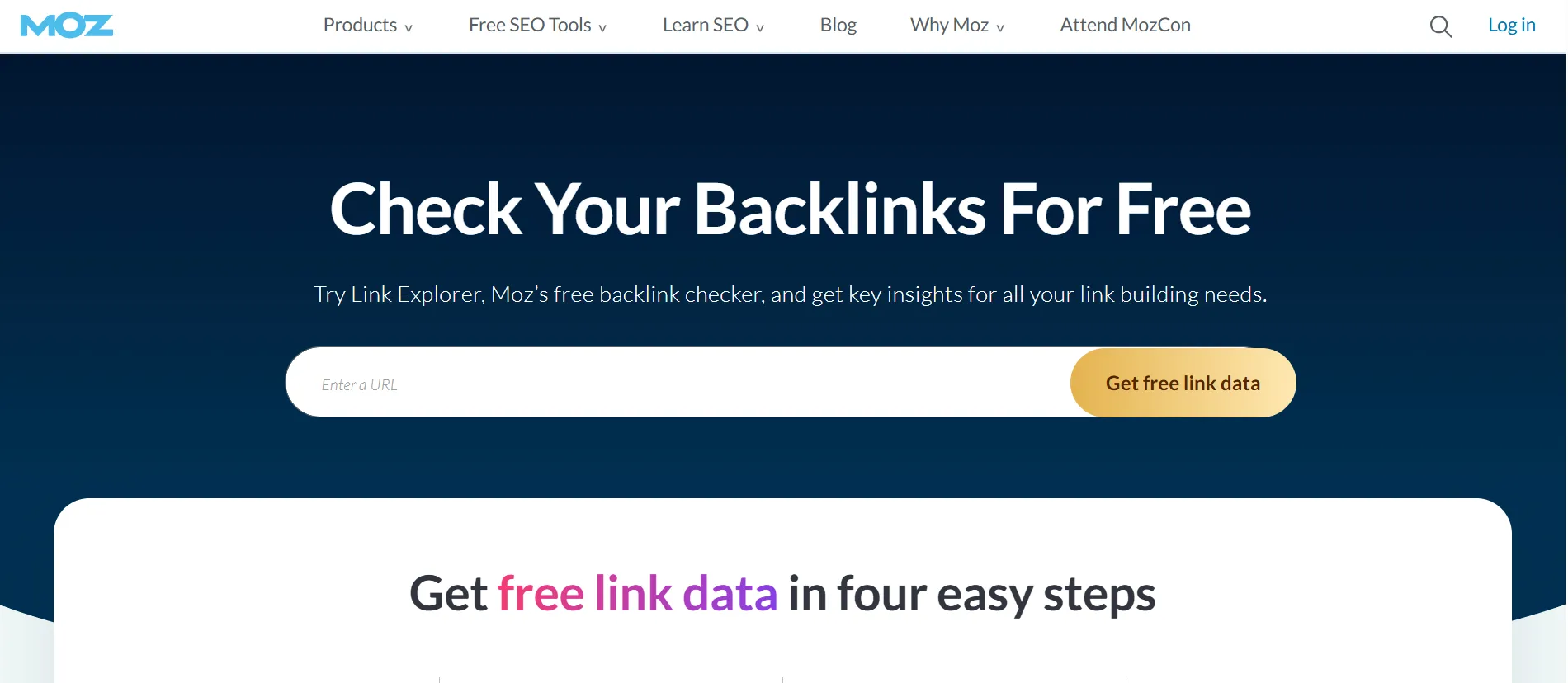
For instance, if a competitor earns links from relevant industry publications, you can review those pages to understand what type of content attracted attention. That doesn’t mean you should copy the same approach blindly. The goal is to find realistic opportunities for creating useful content and building relevant relationships.
Link metrics should be treated as clues, not final judgments. Review the linking page, its topic, and the context of the link rather than relying on a single score.
5. Domain Authority
Domain Authority is one of Moz’s most recognized features. It gives a comparative estimate of a website’s potential to rank based on its link profile and other signals in Moz’s data.
SEO professionals often use DA to compare competing websites, review potential backlink sources, or track changes in a site’s link profile. It can be a handy shorthand when looking at several domains.
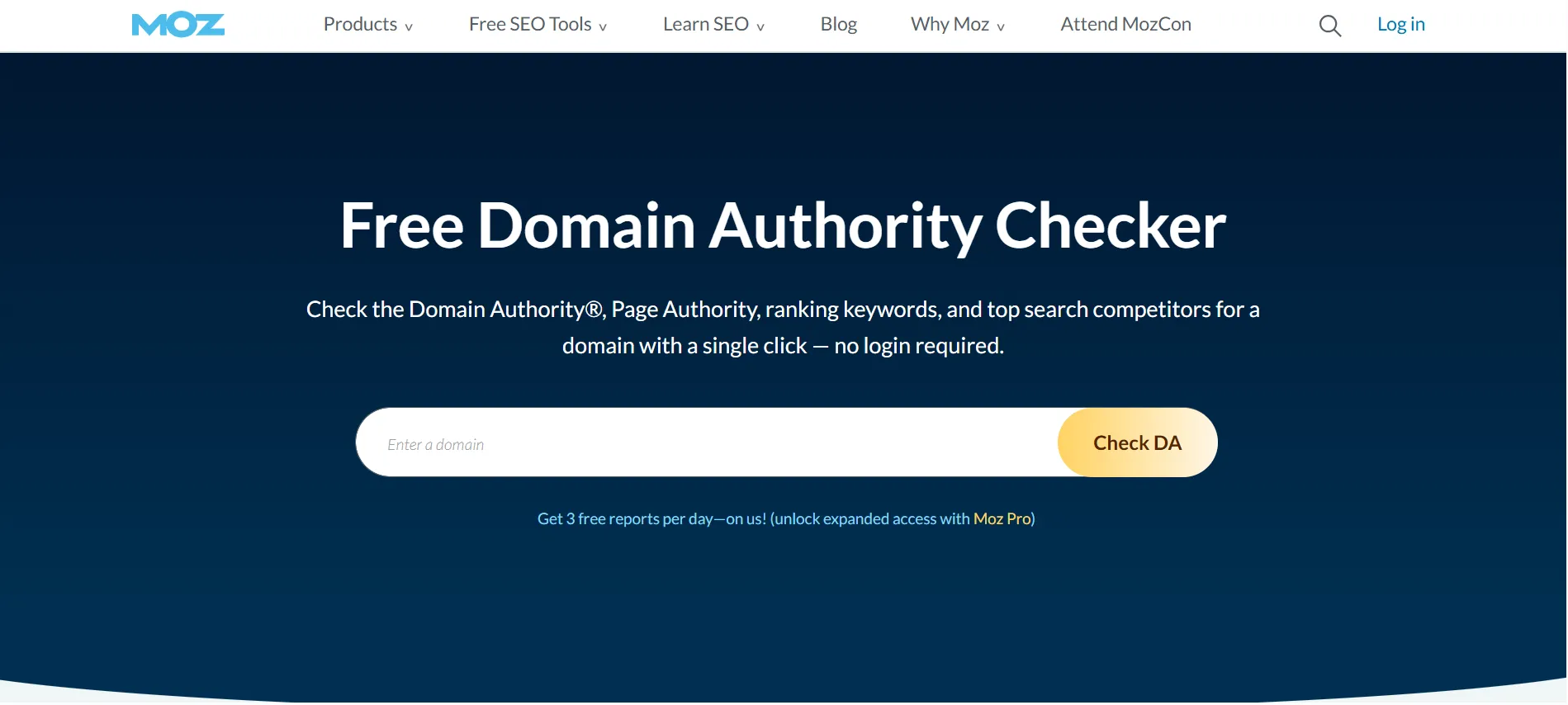
The score has limits. Google doesn’t use Moz’s Domain Authority as a direct ranking factor, and a DA increase doesn’t guarantee more traffic. A website can attract visitors through relevant content and strong search intent even if its score is lower than a competitor’s.
Use DA alongside other evidence, such as ranking performance, content quality, relevance, and organic traffic. It works best as a comparison metric rather than the main goal of an SEO campaign.
6. AI Search Visibility Tools
Search behavior is changing as AI-powered results and answer engines become part of how people discover information. Moz’s current paid plans include features related to AI visibility, tracked prompts, AI dashboards, and AI content briefs. The amount available depends on the plan.
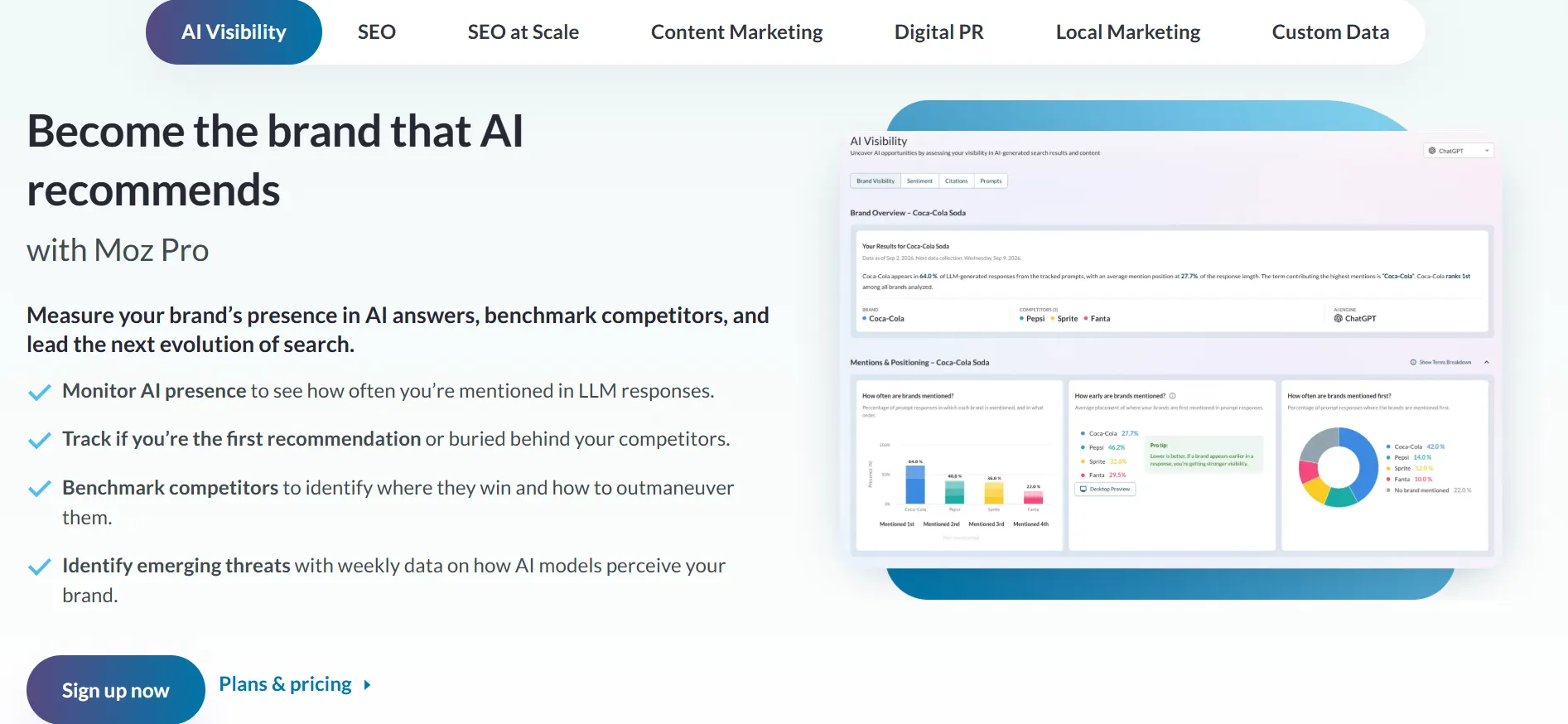
These features can help marketers explore how a brand appears in supported AI search experiences and track selected prompts over time. They may be useful for teams that want to expand their reporting beyond traditional search rankings.
AI search reporting is still an evolving area. Before choosing Moz mainly for these features, check which platforms it supports, what its reports measure, and whether those measurements match your marketing goals.
7. MozBar
MozBar is a browser extension that helps users review SEO information while browsing websites. It can be useful for quick checks during competitor research, page reviews, and link prospecting.
Instead of switching between multiple tabs for every initial check, you can use the extension to get a quick view of selected metrics. It works best as a research aid, not a replacement for a deeper website audit.
Check the current Moz plan details to confirm which MozBar features are included in your subscription.
8. Reporting and SEO Monitoring
SEO work becomes easier to evaluate when you track the same measures over time. Moz Pro provides data that can support reporting on rankings, keyword research, backlinks, and site health.
This can help freelancers report progress to clients and in-house teams share findings with managers. The higher plans also offer additional capacity and reporting options, depending on the current package.
Reports are only useful when they answer a real question. Decide what you need to measure before building a dashboard, whether that’s keyword growth, technical fixes, link acquisition, or visibility for priority pages.
Moz Free Tools: Can You Use Moz Without Paying?
Yes. Moz offers free SEO tools with limited access to selected features. These can be useful if you’re learning SEO, running a small site, or want to try the platform before committing to a monthly bill.
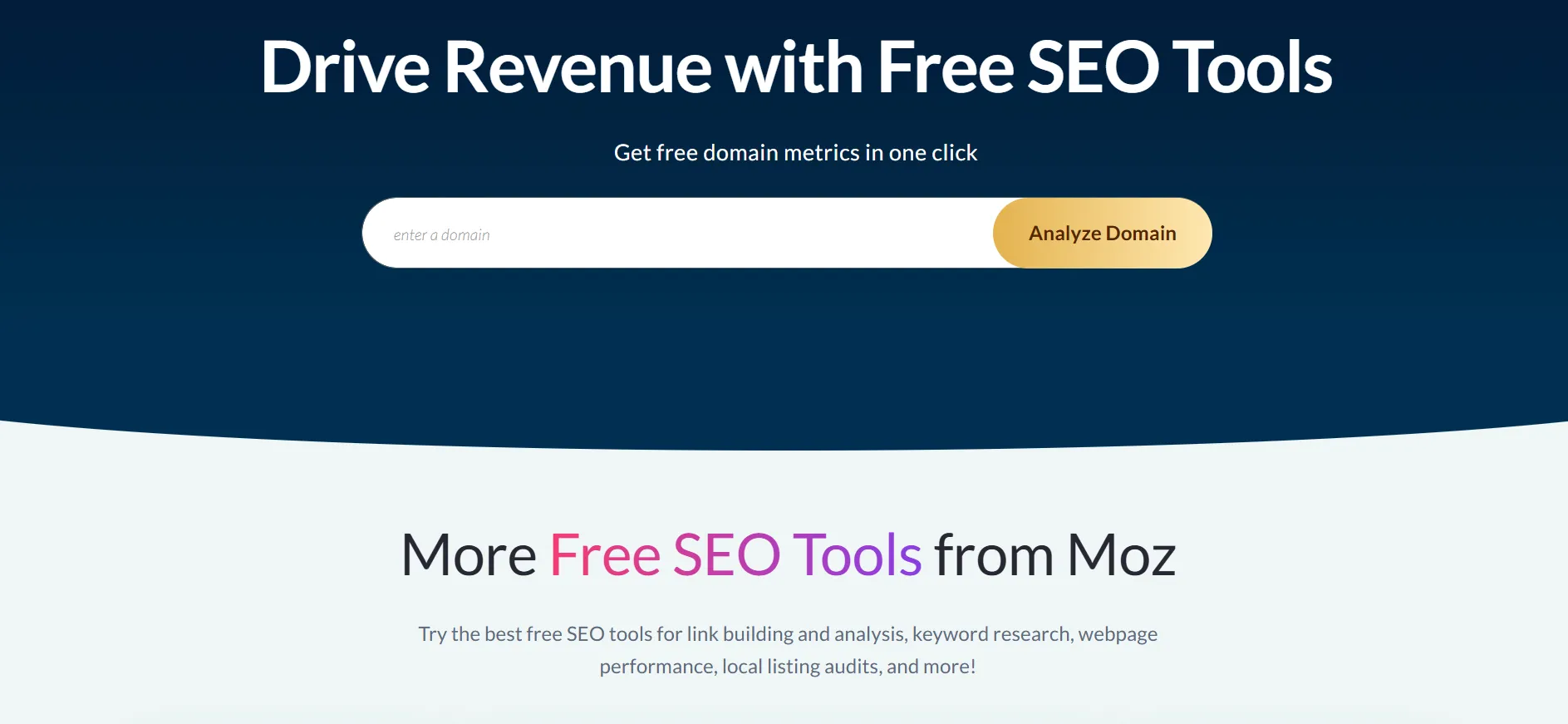
Free access is a sensible first step if you only need occasional research. It lets you become familiar with Moz’s data and interface before deciding whether a paid subscription would save enough time or provide enough additional information.
The main limitation is capacity. If you need regular rank tracking, larger keyword allowances, repeated website crawls, or research across multiple sites, you may find the free tools restrictive. At that point, compare the cost of a paid plan with how often you’ll use its features.
Pros and Cons: Moz Review
Moz has plenty to offer, but it won’t be the right choice for every website owner. Your experience will depend on the features you need and how much SEO work you do each month.
Pros
- A useful set of SEO tools in one place: Keyword research, rank tracking, backlink analysis, and site crawling are available through Moz Pro, which can reduce the need to switch between several tools.
- Recognizable SEO metrics: Domain Authority is widely used for comparing websites and reviewing potential link opportunities.
- Plans for different workloads: Starter suits individuals managing one website, while Standard, Medium, and Large offer higher limits for larger projects.
- Free tools to try first: You can explore selected Moz tools before deciding whether a paid plan fits your budget.
- Helpful for competitor research: Keyword and backlink data can reveal topics competitors target and pages that attract links.
Cons
- Paid plans can be expensive: Standard starts at $99 per month with monthly billing, which may be a lot for a new blogger or small site owner.
- Usage limits vary by plan: Tracked keywords, sites, users, and crawl capacity are limited. Larger teams may need to pay for a higher tier.
Moz vs. Semrush vs. Ahrefs
Moz isn’t the only established SEO platform. Semrush and Ahrefs are common alternatives, and each has a different mix of research tools and reporting features.
Platform | What it is known for | Best fit |
|---|---|---|
Moz | Domain Authority, keyword research, rank tracking, link analysis, and site crawling | Small businesses, SEO professionals, and teams seeking a focused SEO toolkit |
Semrush | Broad digital marketing research, competitor analysis, keyword tools, and content workflows | Marketers who want SEO alongside wider marketing research |
Ahrefs | Backlink research, competitor analysis, keyword research, and content discovery | SEO specialists and teams that spend significant time on link and competitor research |
These descriptions are general rather than a complete feature comparison. Each platform changes its plans and limits over time, so check the current pricing pages before making a decision.
Choose Moz if its tools and metrics fit your daily SEO process, particularly if you already use Domain Authority in your reporting. Consider Semrush if you want a broader marketing toolkit, or Ahrefs if backlink and competitor research are central to your work.
Don’t choose based on brand recognition alone. Test the tools against a real task, such as researching a keyword cluster, auditing an important page, or reviewing a competitor’s backlink profile. The platform that gives you the clearest answers for your work is usually the better investment.
Who Should Use Moz?
Moz can be a good fit for several types of users, although the right plan will vary.
1. Bloggers and Content Publishers
Bloggers can use Moz to discover content ideas, research keywords, monitor rankings, and find technical issues. If you publish regularly and want to track a growing library of articles, a paid plan may save time.
If your blog is new and receives little organic traffic, start with free tools before paying for a subscription. You can upgrade when your content strategy becomes more demanding.
2. Small Businesses
A small business can use Moz to research local or industry-related search terms, monitor important pages, and understand its competitors. Standard may be enough for a business managing a few websites and a focused set of keywords.
Before subscribing, identify the business outcomes you want to improve. More traffic is useful, but qualified enquiries, sales, and leads are better measures of whether SEO work is paying off.
3. Freelancers and SEO Consultants
Freelancers may find Moz useful for keyword research, technical checks, backlink analysis, and client reporting. The choice between Standard and Medium will depend on the number of websites and keywords each client requires.
If you manage several client campaigns, check the tracked-site and user limits carefully. A low monthly price isn’t much of a bargain if you quickly outgrow the included capacity.
4. SEO Agencies and Larger Teams
Agencies handling many clients may benefit from the higher limits in Large or a tailored Enterprise package. Multiple tracked websites, larger crawl allowances, and extra user access can help teams manage more work.
Agencies should also check whether the available reporting options meet their client requirements. If branded reports, larger usage limits, or a particular team setup matter, confirm those details before signing up.
How to Get the Most From Moz
Buying an SEO tool doesn’t improve your rankings by itself. The benefit comes from using its data to make better decisions and following through on the work.
Here are a few practical ways to get more from Moz:
Set clear goals. Decide whether you want to improve organic traffic, increase rankings for commercial keywords, fix technical issues, or build relevant backlinks.
Track relevant keywords. Focus on terms that match your audience and business goals instead of filling your account with every possible phrase.
Review site crawl reports regularly. Prioritize issues affecting important pages and confirm that your fixes work as intended.
Study competitors for ideas. Look at the topics they cover and the pages attracting links, then create content that serves your audience well.
Use metrics as guides. Domain Authority and keyword difficulty can inform your choices, but don’t treat either as a promise of ranking success.
Measure business results. Compare SEO work with organic traffic, enquiries, sign-ups, and sales to see whether your efforts are making a difference.
Reassess your subscription. If you regularly reach plan limits, consider upgrading. If you rarely use the tools, a smaller plan or free alternatives may be enough.
These habits help you judge Moz on what matters: whether its data supports useful work and better results.
FAQs: Moz Review
Moz can help beginners learn keyword research, rank tracking, and technical SEO. Its free tools are a sensible starting point if you're still learning or managing a small website. Consider a paid plan once you need more data or ongoing monitoring.
Moz Pro offers greater capacity and paid features for ongoing SEO work. The free tools can be enough for occasional research, but paid plans make more sense when you need regular tracking, larger keyword lists, or website crawling.
No. Moz provides research data and tools, but it cannot guarantee better rankings. Search performance depends on many factors, including content quality, relevance, technical health, competition, and how search engines evaluate pages.
Standard is a reasonable starting point for small businesses and solo professionals who need to track a few websites. Medium and Large offer more capacity for growing teams and agencies. Starter may suit individuals managing one website with lighter needs.
Moz's pricing page has displayed a free-trial offer for Medium. Trial terms and availability may change, so confirm the current offer and any payment requirements on the official website before signing up.
Moz offers products and resources related to local search, including Moz Local, which is separate from the Moz Pro subscription. If your main goal is managing business listings and local presence, compare Moz Local with Moz Pro and confirm which product covers the features you need.
Quick Links:
Final Verdict: Moz Review
Moz remains a solid option for people who want a collection of SEO tools under one roof. Keyword Explorer, rank tracking, site crawling, Link Explorer, Domain Authority, and AI visibility features can support a regular SEO workflow without requiring you to handle every task separately.
The price is the main consideration. Starter costs $49 per month, while the main Moz Pro plans range from $99 to $299 per month with monthly billing. Annual billing reduces the effective monthly rate on Standard, Medium, and Large, but you’ll need to consider the upfront cost and the limits included in each plan.
For bloggers and small businesses, the best approach is to try the free tools first and identify what you can’t do with them. Freelancers, agencies, and in-house teams with ongoing SEO work may get more from a paid subscription, especially when they manage several websites or need regular reporting.
Our verdict: Moz is worth considering if you need consistent keyword research, rank monitoring, link analysis, and technical SEO checks. It may be too expensive if you only need occasional keyword ideas or a quick Domain Authority check. Start with the smallest plan that meets your needs, test it against real projects, and upgrade only when your workload calls for it.
