
GoDaddy VPS Hosting Review 2026: Is It Still Worth It?
GoDaddy VPS Hosting Review questions often circle back to the same point: the low first-term rates look attractive, yet the renewal jump and the self-managed setup change the long-term math.

GoDaddy's VPS hosting gives you a virtual server with dedicated CPU, RAM, and storage. You can pick Linux or Windows and choose between self managed and managed plans. Entry specs start at 1 vCPU, 2 GB RAM, and 40 GB NVMe storage. The page carries a 99.9% uptime claim. It suits developers and small businesses that need more control than shared hosting gives. Check the price on the plan page before you buy.
Pros
- Flexible hardware: Plans scale from 1 vCPU and 2 GB RAM up to 32 vCPUs and 128 GB RAM.
- Choice of operating system: You can pick AlmaLinux, Debian, Ubuntu, or Windows Server.
- Stated uptime: The page promises 99.9% uptime with DDoS protection and 24/7 monitoring.
- Managed option: Customers who lack server skills can hand the upkeep to GoDaddy experts.
- Automated backups: Every plan includes automated snapshot backups, with on-demand backups available.
Cons
- Prices not shown: The page text does not list plan costs.
- Backup limit: The page mentions 7 days of automated snapshots, which may be short for some businesses.
The smallest plan (1 vCPU and 2 GB RAM) commonly appears at $8.99 a month when you commit to three years and then moves to roughly $14.99 a month afterward.
The next step up (2 vCPU and 4 GB) sits near $17.99 for the opening term and renews around $29.99. Larger configurations follow the same pattern, with introductory rates of about $34.99 and $44.99 for the 4 vCPU options before the higher renewal figures take over.
Every plan ships with NVMe storage, snapshot backups, and full root access. A control panel costs extra, and fully managed help is a separate higher-priced product. Most new accounts carry a 30-day money-back window.
The service remains useful for people already inside the GoDaddy ecosystem who want root access without switching companies. On pure price and flexibility it faces stiffer competition once the renewal rates and add-ons enter the picture.
1. Entry Plan: 1 vCPU and 2 GB RAM
This configuration is the starting point. It supplies one virtual CPU core, 2 GB of memory, and 40 GB of NVMe storage. Only Linux is offered. Snapshot backups come included, root access is standard, and one extra IP address can be requested. Data centers sit in North America, Europe, and Asia-Pacific regions.
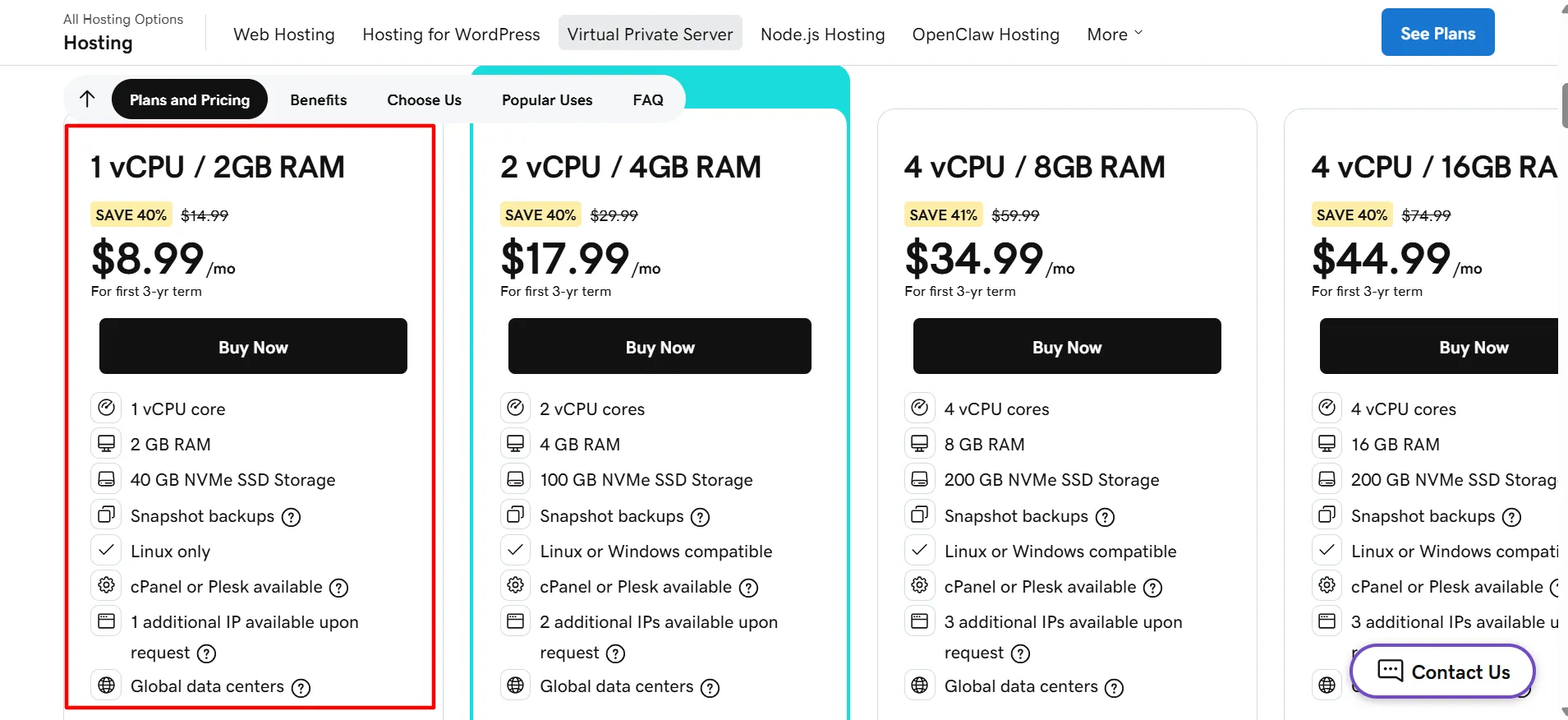
The three-year promotional rate is commonly $8.99 a month, which means roughly $324 paid up front. After that term the rate typically rises to about $14.99 a month. Adding cPanel or Plesk brings an extra charge near $20 a month.
The resources stay modest. A single low-traffic site or a basic test environment can run here, but memory pressure appears quickly once a database or more visitors arrive.
Windows is unavailable. Many people who simply need to host ordinary websites discover that shared or managed WordPress plans end up cheaper once the control-panel fee is counted. The near-doubling at renewal is the number that matters most for anyone planning to stay longer than three years.
2. Recommended Plan: 2 vCPU and 4 GB RAM
This size is frequently labeled recommended. It provides two virtual CPU cores, 4 GB of RAM, and 100 GB of NVMe storage. Both Linux and Windows are available. Snapshot backups and root access remain standard, and two extra IP addresses can be requested.
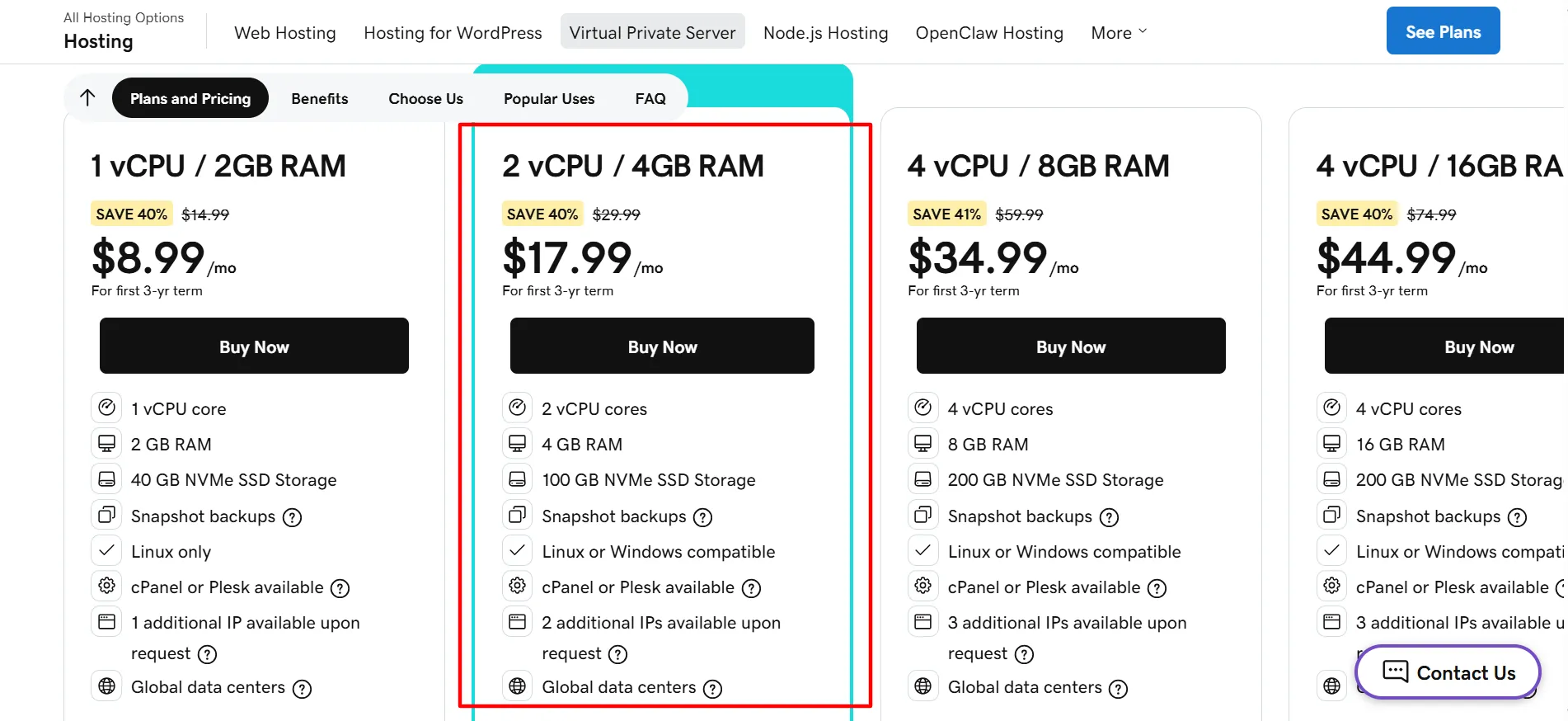
The opening three-year rate is commonly $17.99 a month (about $648 paid up front). Renewal typically lands near $29.99 a month. The optional control panel still adds its monthly fee.
The extra memory and storage make everyday sites and small applications more comfortable than the entry plan. Concurrent visitors and modest databases fit more easily.
The renewal rate still nearly doubles the introductory figure, so the monthly outlay rises once the prepaid period ends. Adding a control panel pushes the real cost higher still. This tier is a frequent landing spot for growing small-business workloads that later get re-evaluated when the first term expires.
3. Mid-Tier Plan: 4 vCPU and 8 GB RAM
This step includes four virtual CPU cores, 8 GB of RAM, and 200 GB of NVMe storage. Linux and Windows are both supported. Snapshot backups, root access, and the ability to request additional IPs are included.
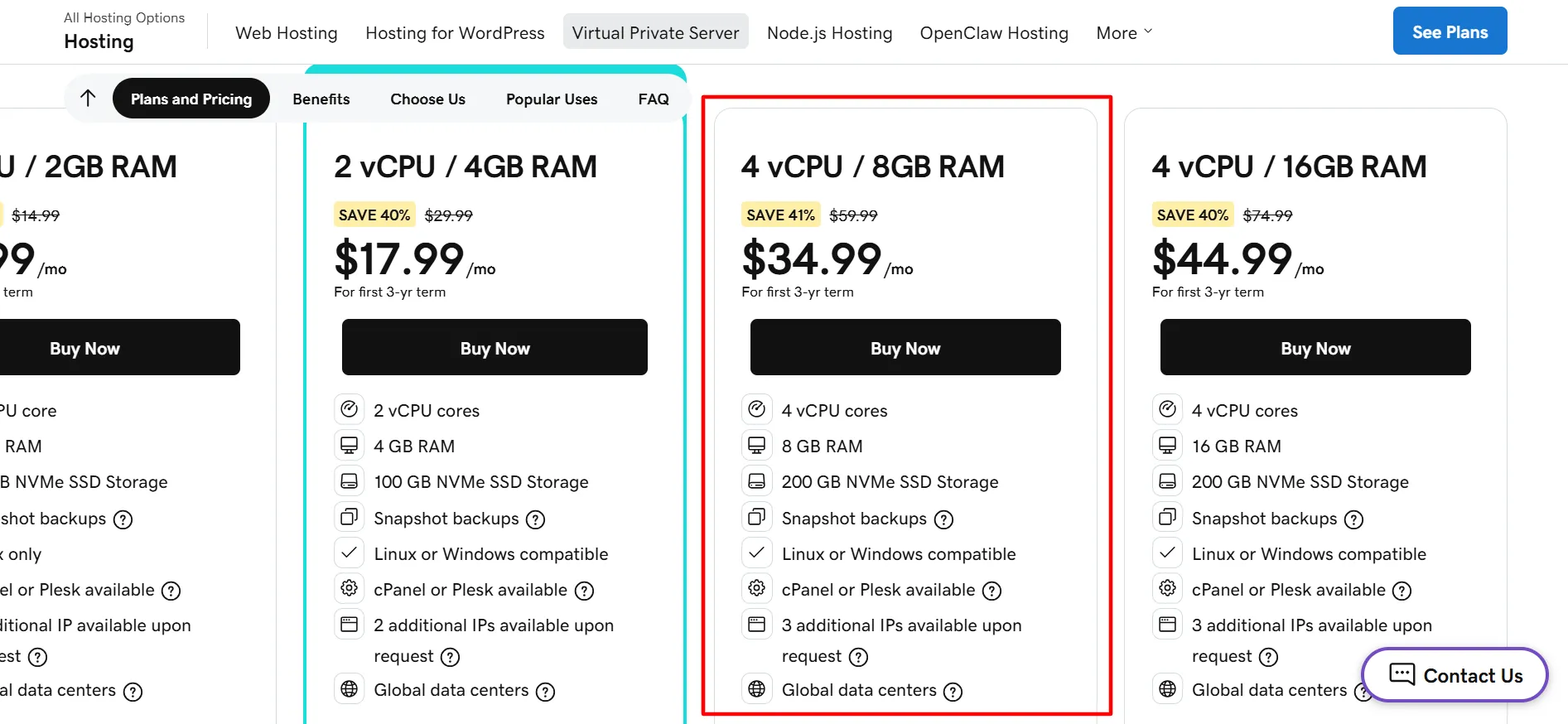
The three-year introductory rate is commonly $34.99 a month (roughly $1,260 paid up front). Renewal is typically listed near $59.99 a month. The control-panel add-on continues to apply if chosen.
Busier sites, small stores, or applications that need more processing headroom sit more comfortably here. Storage doubles from the previous tier.
The absolute price is higher, and the renewal increase follows the same large step seen on the lower plans. Anyone considering this size should add up the full three-year renewal total before the initial payment.
4. Higher-Memory Plan: 4 vCPU and 16 GB RAM
This configuration keeps four virtual CPU cores but doubles the memory to 16 GB while storage stays at 200 GB of NVMe. Linux and Windows remain available. Snapshot backups and root access are included.
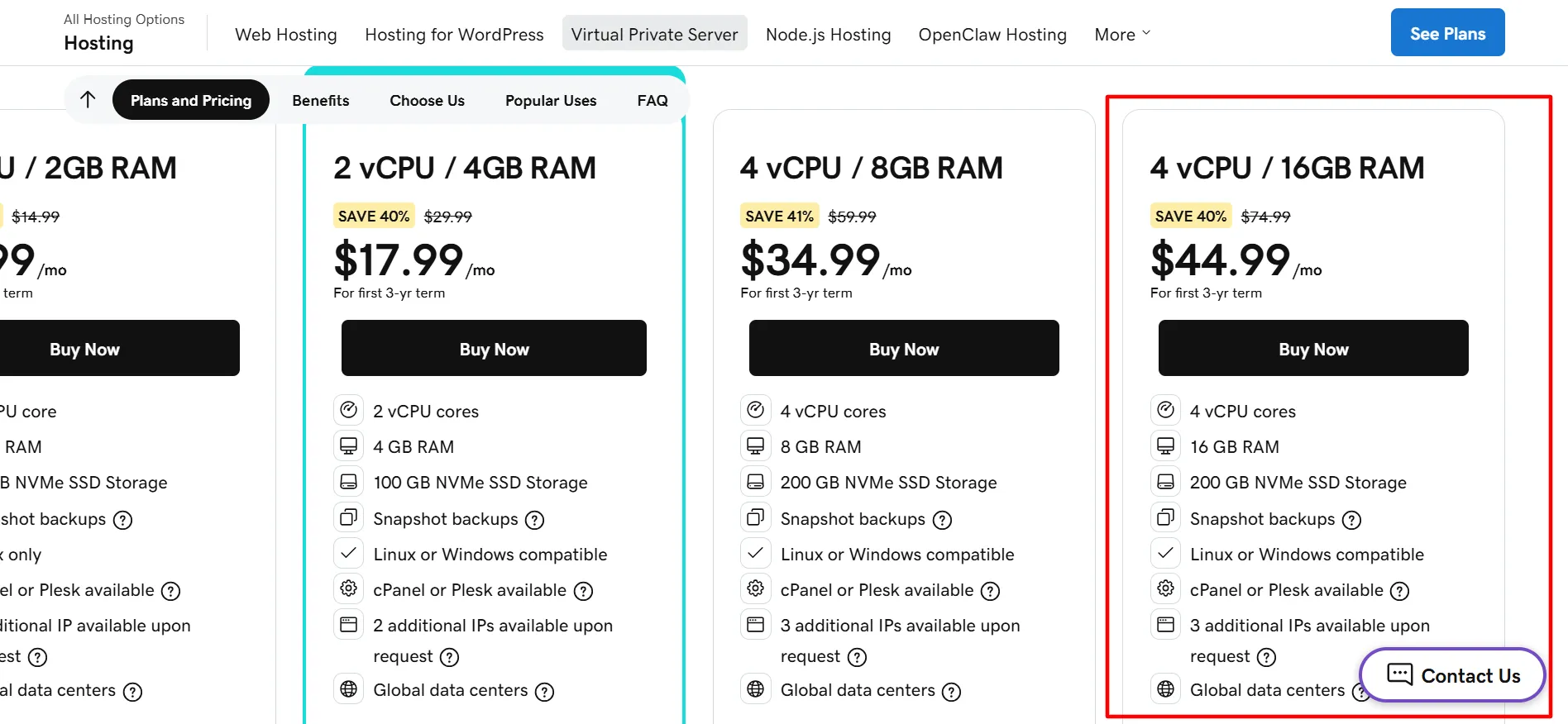
The three-year promotional rate is commonly $44.99 a month (about $1,620 paid up front). Renewal typically moves to roughly $74.99 a month. Extra IP addresses can still be requested.
The additional RAM helps larger databases and higher concurrent loads. Storage does not increase, so the main gain is memory.
This is the highest of the commonly listed standard tiers, and the renewal figure is the largest among them. Users who reach this level often compare dedicated servers or other VPS providers once the multi-year renewal math is clear.
Larger Configurations and Managed Versions
Further plans exist with eight or more virtual CPUs and higher RAM amounts. Introductory three-year rates have appeared from roughly $65 a month upward, with renewals that continue to scale.
A fully managed VPS product is sold separately. On those plans GoDaddy takes on more of the day-to-day server work. Managed pricing sits above the self-managed rates. Windows licensing, extra IP addresses, and control panels remain add-on costs across most plans.
Everyday Features and Real-World Limits
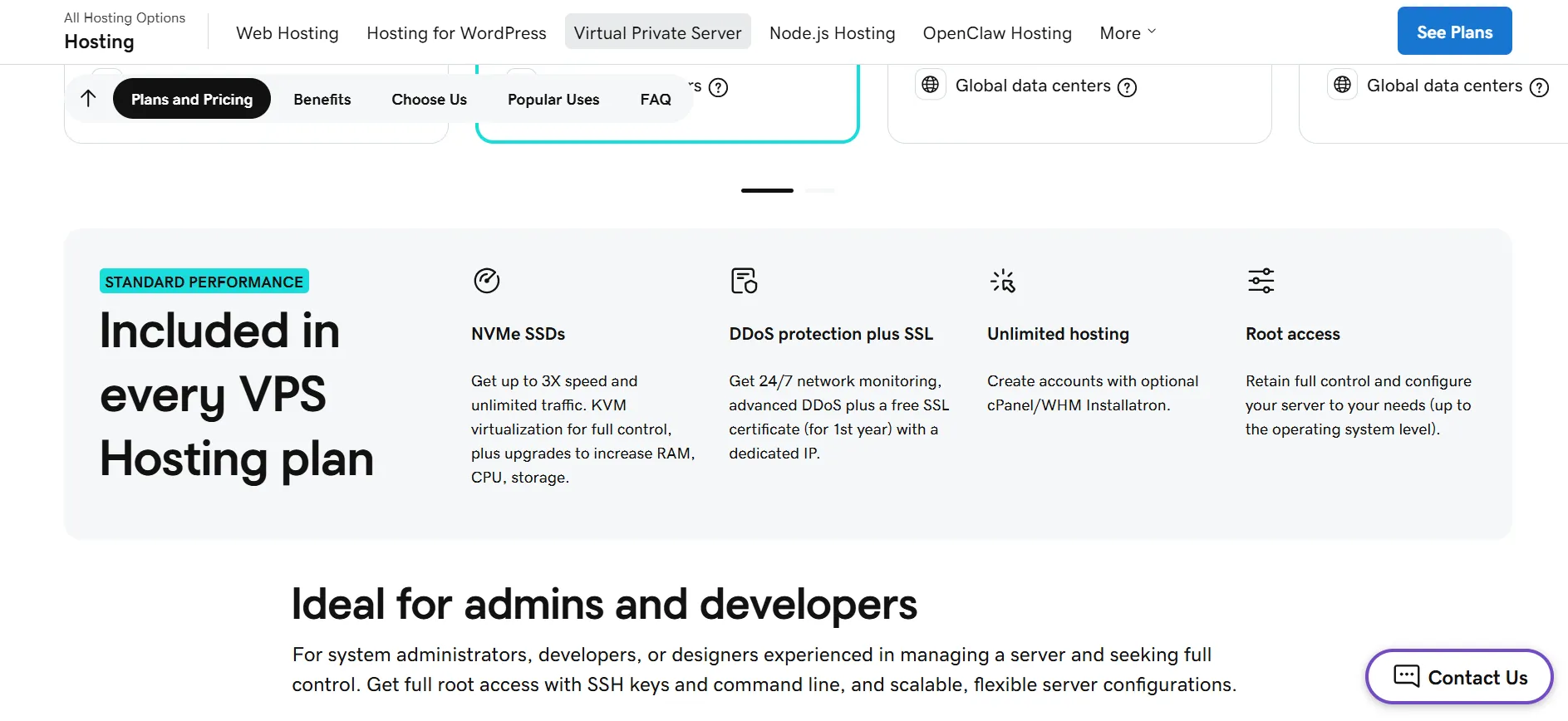
All plans include NVMe storage, snapshot backups, root access, basic DDoS protection, and network monitoring. A free SSL certificate is frequently included for the first year.
Bandwidth is generally unmetered inside fair-use rules. Support runs 24/7 through phone, chat, and tickets, though the quality of replies varies in customer comments.
Performance tracks the stated resources reasonably well for ordinary workloads, yet the smallest plans remain constrained by design. The 30-day money-back window lets new customers test the setup.
Is the Service Still Worth Choosing?
The plans remain a reasonable choice for existing GoDaddy customers who want root access and prefer to stay with one provider. NVMe storage and snapshot backups are practical inclusions.
The entry and mid-size plans can handle light to moderate loads once the renewal rate is accepted. Pure cost comparisons are less favorable. Other VPS providers often deliver lower long-term rates, more flexible billing, or a control panel already included.
People who only need ordinary website hosting frequently find shared or managed WordPress options cheaper after the control-panel fee is added to a self-managed VPS. The managed VPS route reduces technical work but raises the monthly figure further.
Pros and Cons: GoDaddy VPS Hosting Review
Pros
- NVMe storage and snapshot backups included on every plan.
- Full root access on self-managed configurations.
- Straightforward resource steps starting at 1 vCPU / 2 GB.
- Data centers in multiple global regions.
- 30-day money-back guarantee on most new accounts.
Cons
- Renewal rates rise substantially after the introductory multi-year term.
- Control panel is an extra monthly cost on most plans.
FAQs: GoDaddy VPS Hosting Review
The 1 vCPU / 2 GB plan is commonly $8.99 a month on a three-year term and renews near $14.99 a month.
Renewal figures are higher across the board. Common amounts are roughly $14.99, $29.99, $59.99, and $74.99 a month for the first four standard tiers.
No. cPanel or Plesk is an optional add-on that typically costs around $20 a month.
No. Windows support begins at the 2 vCPU / 4 GB plan.
A 30-day money-back guarantee is commonly available on new VPS accounts.
Quick Links:
Final Assessment: GoDaddy VPS Hosting Review
GoDaddy VPS Hosting Review results show the product is still worth considering mainly for current GoDaddy users who need root access and can accept the renewal rates.
The 1 vCPU / 2 GB plan commonly starts at $8.99 a month for three years and renews near $14.99. The 2 vCPU / 4 GB plan is frequently $17.99 then $29.99. Higher tiers continue the same introductory-versus-renewal pattern with larger resources and higher absolute prices.
Snapshot backups, NVMe storage, and root access are included, yet the control panel costs extra and the true ongoing cost is the renewal rate. Add up both the three-year introductory total and the three-year renewal total before paying.
For ordinary websites, other GoDaddy plans or external VPS providers often end up lower cost once add-ons are counted. Use the 30-day window to test the server if desired, then decide whether the resources and management level match the actual needs of your sites or applications. Verify the latest regional pricing and any current offers directly on the product page.
