DataCamp Review 2026: Is It Worth It?
DataCamp review of the current offering starts with a free Basic plan that opens the first chapter of every course. Premium is listed at $13 a month when billed annually. Teams is listed at $13 per user a month when billed annually for groups of two or more. Enterprise is custom-priced.

DataCamp teaches data, coding, and AI skills through short lessons and hands on practice. It suits beginners who want to switch careers as well as teams that train staff. The site highlights career tracks, skill paths, and industry certifications. It also offers a classroom product for schools.
Pros
- Short lessons: Videos are broken into bite sized parts with exercises after each one.
- Practise as you learn: Interactive exercises help you apply new skills right away.
- Career paths: Step by step tracks take beginners toward data and AI roles.
- Recognised certifications: Certifications are built around in demand job roles.
Cons
- Prices not shown: The homepage does not list plan costs.
- Certifications cost extra: Earning a certificate may add to your total spend. Confirm this on the certification page.
The yearly option shows a $78 savings on Premium compared with the higher monthly rate. Full access to 790+ courses, projects, certificates, and career tracks requires a paid plan.
Is DataCamp worth it in 2026? It is worth it for learners who finish multiple courses and use the certificates or career tracks. It is less worth it for people who only sample the opening chapters or study irregularly.
What the Free Basic Plan Actually Gives You
Basic costs nothing. You get the opening chapter of every course, a professional profile, cheat sheets, mobile access, skill assessments, live code-alongs, and competitions.
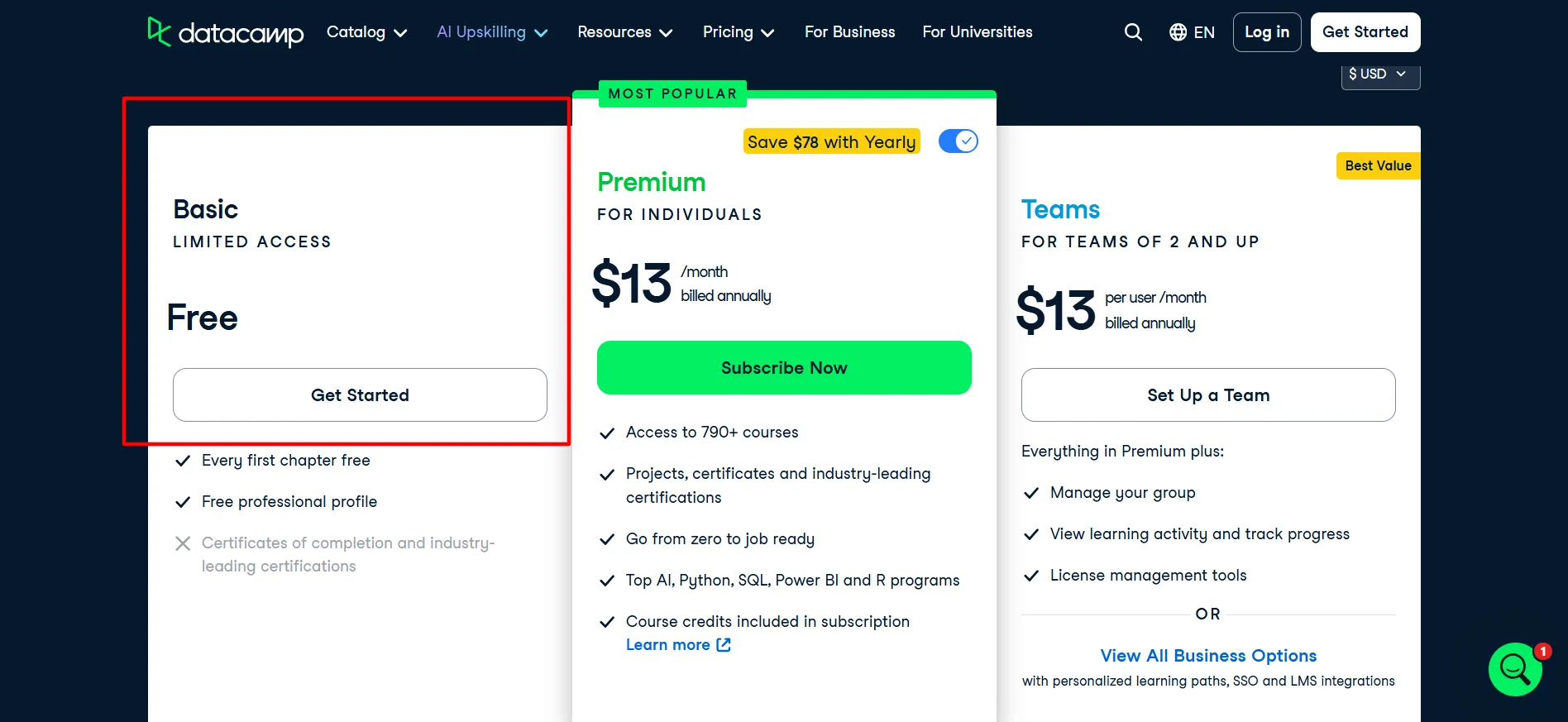
Certificates and full course completion stay locked. Most projects and the guided career tracks also stay behind the paid wall. Practice exercises are limited.
The free plan is worth using to test the teaching style. You can finish the first lessons in Python, SQL, R, Tableau, or Power BI without a credit card. Many people use it for a week or two, then decide.
If the exercises feel clear and you want to keep going past the first chapter, the free access has done its job. If you only ever finish those opening sections, Basic is already enough. There is no time limit, so you can return later. The professional profile remains available even on the free plan.
Premium Plan: Is the $13 Annual Rate Worth It?
Premium is the individual plan listed at $13 a month when billed annually. The page shows a $78 yearly saving against the monthly rate.
You unlock the full library of 790+ courses, hands-on projects, course certificates, and industry certifications. Career and skill tracks become available. Everything from Basic carries over, plus priority support and the tools to build a portfolio.
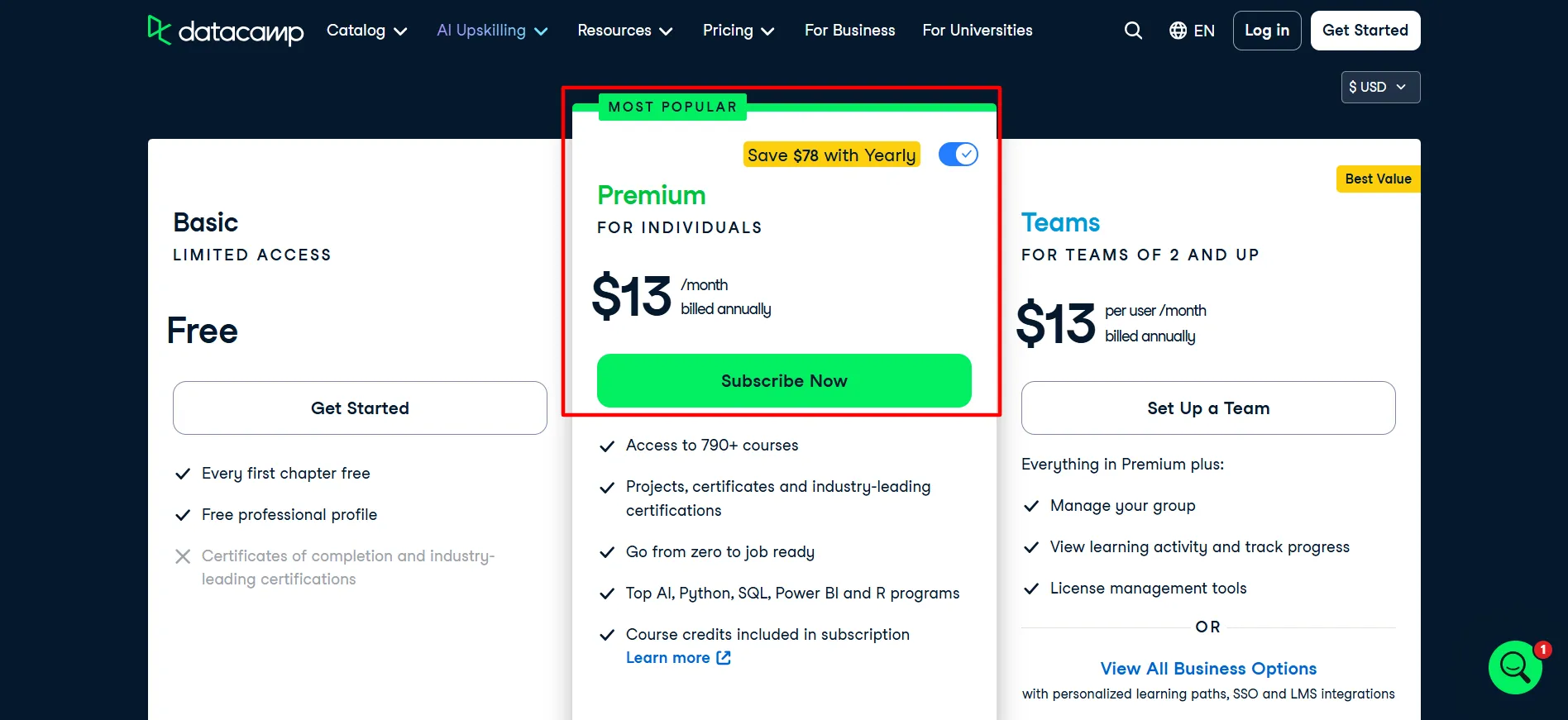
This plan is worth the rate for people who plan to work through several courses over six months or longer. The annual figure is the lower ongoing cost for steady study.
Monthly billing exists but raises the per-month price. It suits career switchers who want a clear sequence in data skills and working professionals who need targeted practice.
Learners who finish a meaningful number of courses and collect certificates usually find the annual rate reasonable. Learners who complete only one or two courses see a higher effective cost per finished course.
Sampling the free chapters first removes most of the guesswork. Once you subscribe on annual billing, the rate stays fixed for the year unless a new promotion appears.
Teams Plan: Is the Per-User Rate Worth It?
Teams carries the same $13 per user monthly rate on annual billing once you have at least two people. Every seat receives the full Premium catalog and certificates.
The extra pieces are group management, activity tracking, progress views, license tools, an admin dashboard, and team reports. Custom tracks remain off-limits until Enterprise.
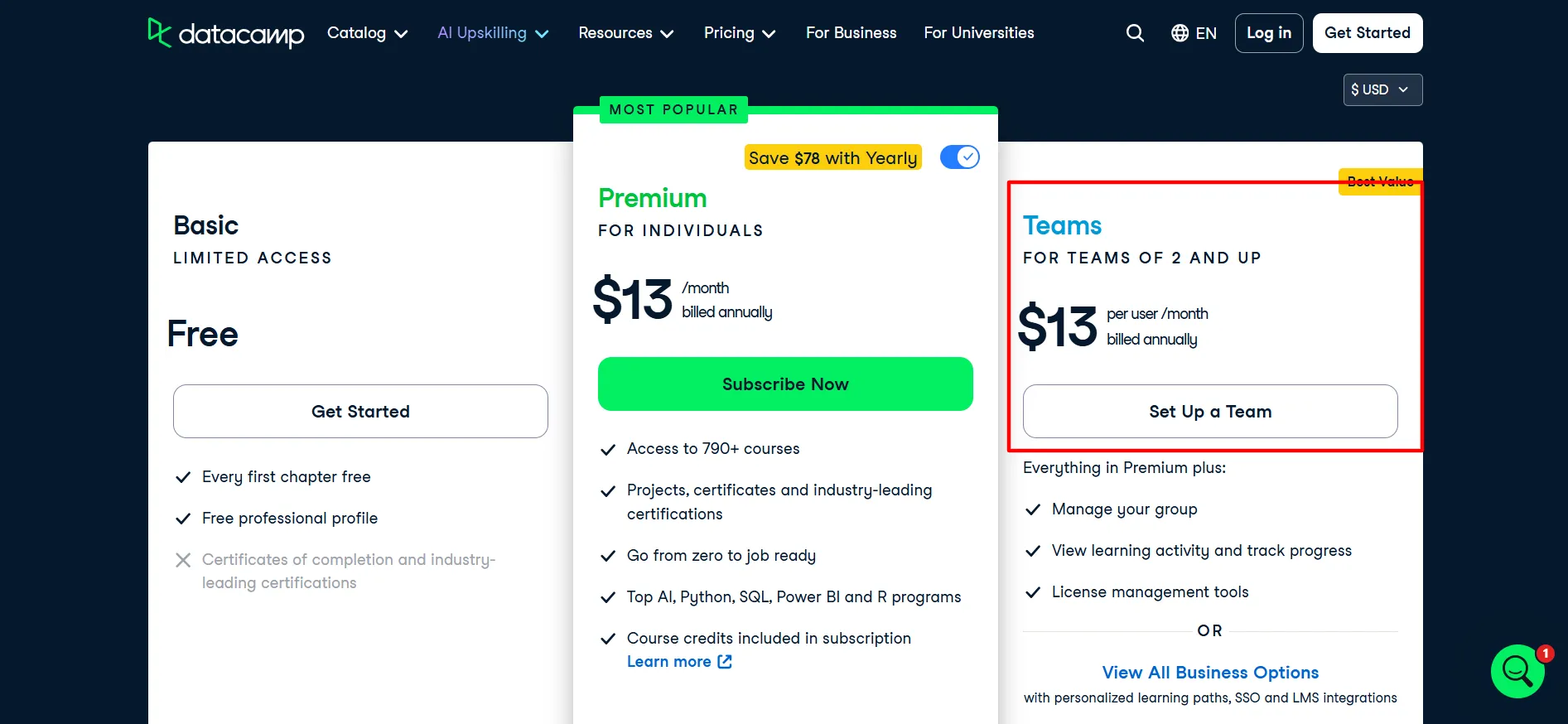
Small groups that want shared visibility usually find this rate practical. An admin can assign material and watch completion without juggling separate personal accounts.
The minimum of two seats keeps it simple for startups or small departments. Once the group grows or needs single sign-on and custom pathways, Enterprise becomes the logical next step.
For two to ten people who mainly need the catalog plus basic tracking, the per-user annual figure is typically the cleanest option. The cost scales directly with the number of seats.
Enterprise and Student Options
Enterprise is quoted individually. It layers personalized pathways, Google and Microsoft SSO, Skill Matrix, SAML SSO, LMS connections, custom report templates, co-branded pages, and the ability to build your own tracks on top of the Teams features.
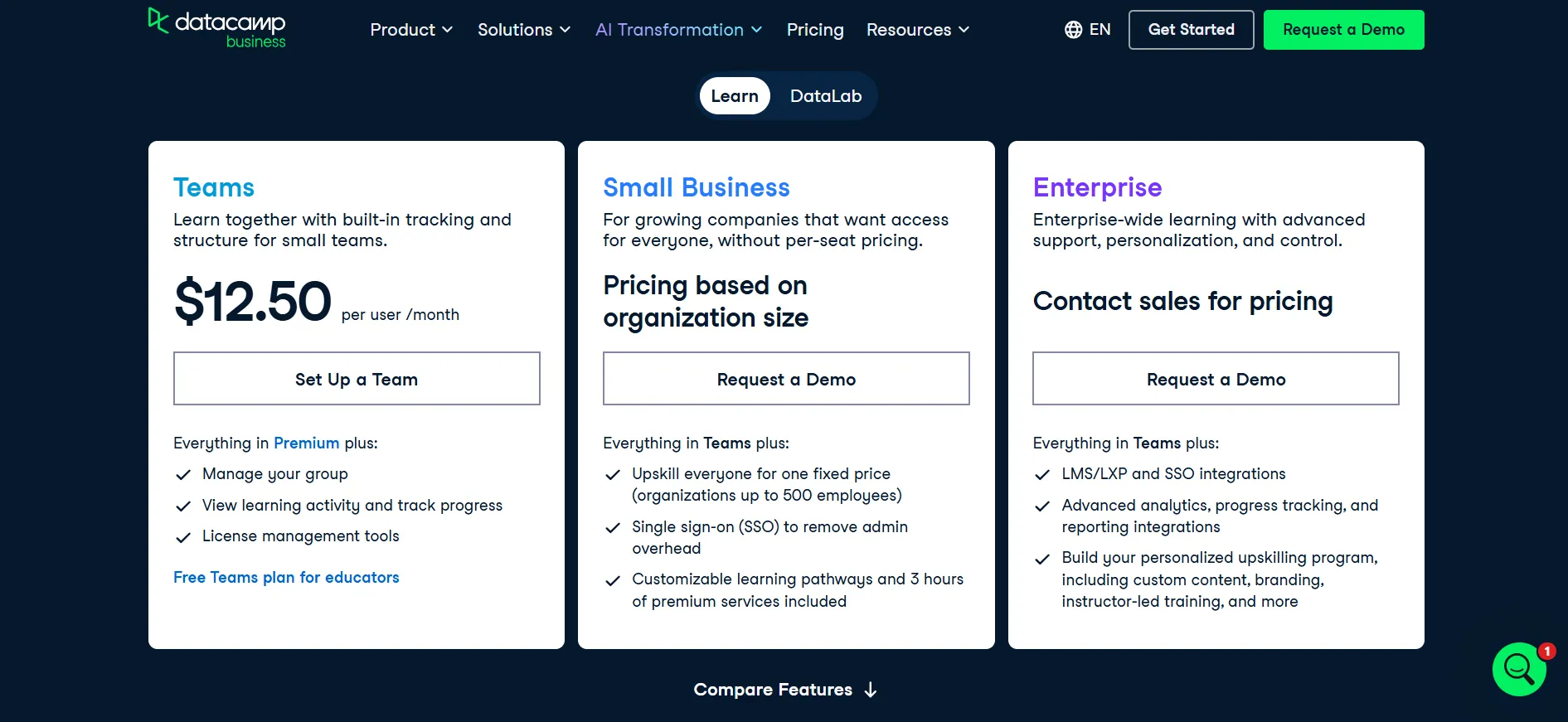
Larger organizations that require those controls request a quote. Most individuals and small teams never reach this level.
Eligible students can claim a discounted Premium rate, often more than half off the standard yearly figure. Verification is required. The content matches regular Premium.
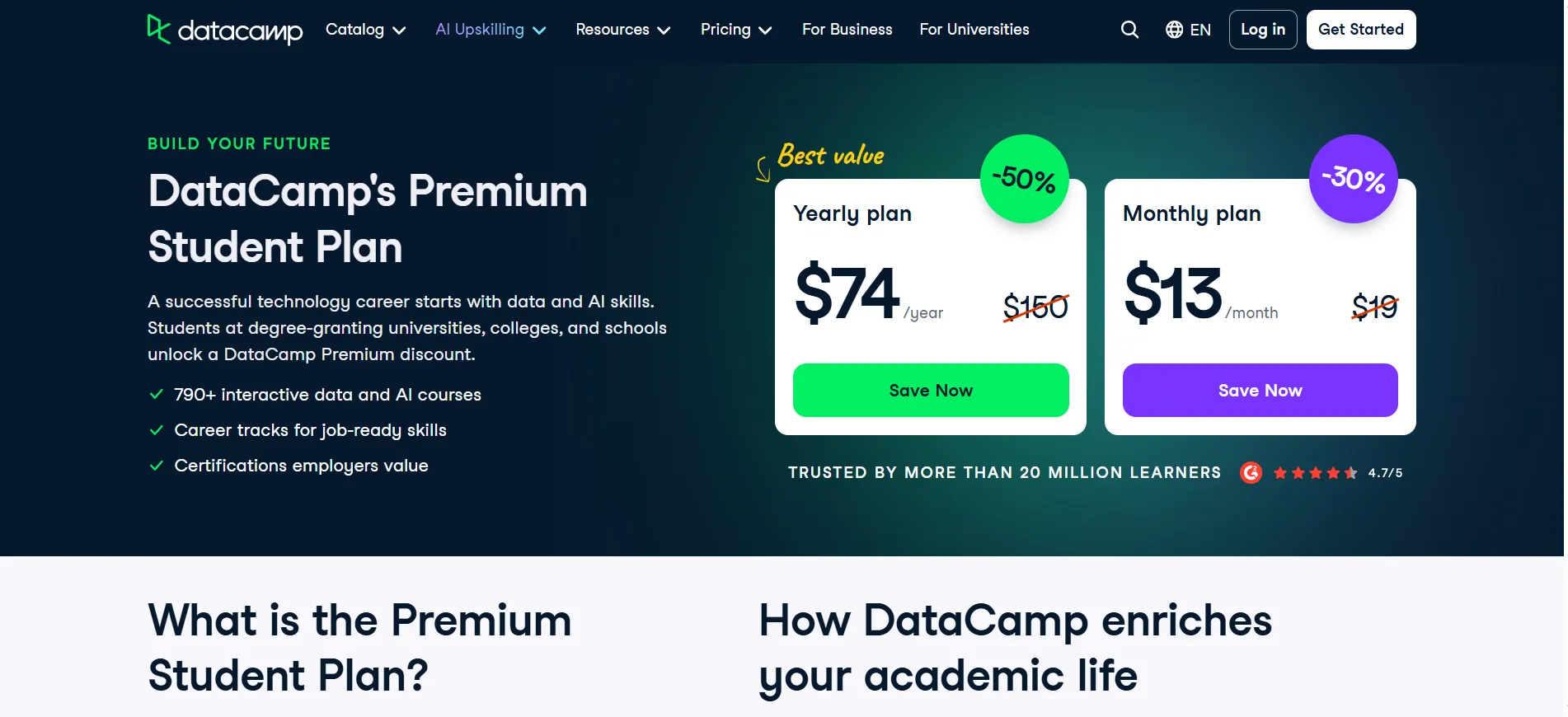
Students who will use the catalog across a semester or two usually see clear value in the lower rate. Check the student page for current eligibility rules.
Core Features That Decide the Value
The interactive coding environment is available on every plan, but the depth of exercises increases once you pay. Certificates require a paid plan and a completed course.
Career tracks guide you through a sequence of courses aimed at specific roles. Projects let you practice with downloadable notebooks. Mobile learning works on every plan.
Skill assessments help you see where you stand before you start a track. These features are the main reasons people move from Basic to Premium. The free plan lets you sample the style. The paid plans remove the chapter limits and open the certificates and tracks.
How to Decide If DataCamp Is Worth It in 2026
Begin on Basic and finish the opening chapters of two or three topics you care about. If the style clicks and you want to complete full courses or collect certificates, move to Premium on annual billing.
The $13 monthly annual rate is the number most individual learners end up using when they study consistently. If two or more people need access plus basic tracking, Teams at the same per-user annual rate is usually cleaner than multiple personal seats.
Enterprise only makes sense when the organization needs the advanced integrations and reporting. Count the courses you realistically expect to finish. Higher completion numbers make the annual rate look better on a per-course basis.
Low completion numbers favor staying free. Set a calendar reminder before the yearly renewal so you can review whether the completed courses justified the cost.
What Affects the Real Cost
Annual billing produces the $13 figure and the $78 saving shown on the page. Promotions can drop the annual total further for limited periods. Team size multiplies the Teams cost directly.
Enterprise quotes scale with headcount and feature needs. The largest variable is how many courses you actually complete. Steady progress over months usually makes the annual Premium rate feel reasonable.
Sporadic use makes even the lower annual figure feel expensive. Regional pricing can shift the exact dollar amount at checkout.
Taxes are added separately in some countries. If a promotion is active when you subscribe, confirm whether it applies only to the first year or continues on renewal.
Pros and Cons: DataCamp Review 2026
Pros
- Free Basic plan lets you sample every course.
- Full library and certificates open on Premium and Teams.
- Annual billing keeps the monthly rate at $13.
- Student discounts available for eligible users.
- Team tracking tools included on Teams.
Cons
- Full courses require a paid plan.
- Annual plans typically cannot be paused.
FAQs: DataCamp Review 2026
It is worth the rate when you finish multiple courses and use the certificates or career tracks. It is less useful if you stay on the opening chapters.
Basic is free. Premium is $13 a month billed annually. Teams is $13 per user a month billed annually. Enterprise is custom. Monthly rates are higher when offered.
Yes. The Basic plan is free and opens the first chapter of every course. There is no separate trial for the paid plans.
Certificates are available on Premium, Teams, and Enterprise.
Yes. You can move from Basic to Premium or Teams at any time. Enterprise requires a sales conversation.
On annual billing the rate is fixed for the subscription period. Promotions can change the starting price, so confirm the number at checkout.
Quick Links:
Final Verdict: DataCamp Review 2026
DataCamp review findings for 2026 show the platform is worth it for learners who plan to finish more than the opening chapters. Premium at $13 a month on annual billing is the straightforward choice for most individuals who study steadily.
Teams at the same per-user annual rate fits small groups that want basic tracking. Enterprise only fits organizations that need the advanced controls. Basic remains free for sampling.
Annual billing is the lower number compared with monthly options. Use the free chapters to confirm the style, then move to Premium if you plan regular study. Check the pricing page for the exact figures and any current promotions before you subscribe.
For learners who complete a solid number of courses, the annual Premium rate usually lines up with the value they receive. The platform works best when the learning is consistent rather than occasional.
