Coursera Review 2026: Is It Worth It?
Coursera review of the current platform starts with a free preview that opens the first module of most courses. Coursera Plus is commonly listed at $59 a month or $399 a year. Single courses often run a one-time $49, and Specializations or Professional Certificates run $49 to $79 a month. Degrees carry separate university tuition.

Coursera partners with universities and companies like Google, IBM, Yale, and Meta to deliver courses, Specializations, Professional Certificates, and full online degrees. It suits beginners exploring a new field, professionals chasing a job-ready credential, and teams that want shared learning with tracking. The catalog is large and the free preview makes it easy to test before you pay.
Pros
- Huge catalog: 10,000+ courses and Specializations from top universities and companies.
- Free previews: Sample the first module of most courses before paying anything.
- Recognised credentials: Professional Certificates and degrees carry real brand weight with employers.
- Flexible access: Choose a single course, a subscription, or Coursera Plus depending on how much you plan to study.
- Financial aid available: Eligible learners can apply for reduced or waived fees.
Cons
- Certificates cost money: Free previews do not include a certificate on completion.
- Degree pricing is separate: University degree programs are not covered by Plus or Teams.
Annual billing on Plus saves roughly $309 compared with twelve months of the monthly rate. A 7-day free trial is often available on Plus monthly, and a 14-day money-back guarantee typically applies to Plus annual.
Is Coursera worth it in 2026? It is worth it for learners who plan to finish multiple courses, want a recognised certificate, or need a structured path toward a new role. It is less worth it if you only ever sample the free preview and never move past the opening module.
What Is Coursera and Who Is It For?
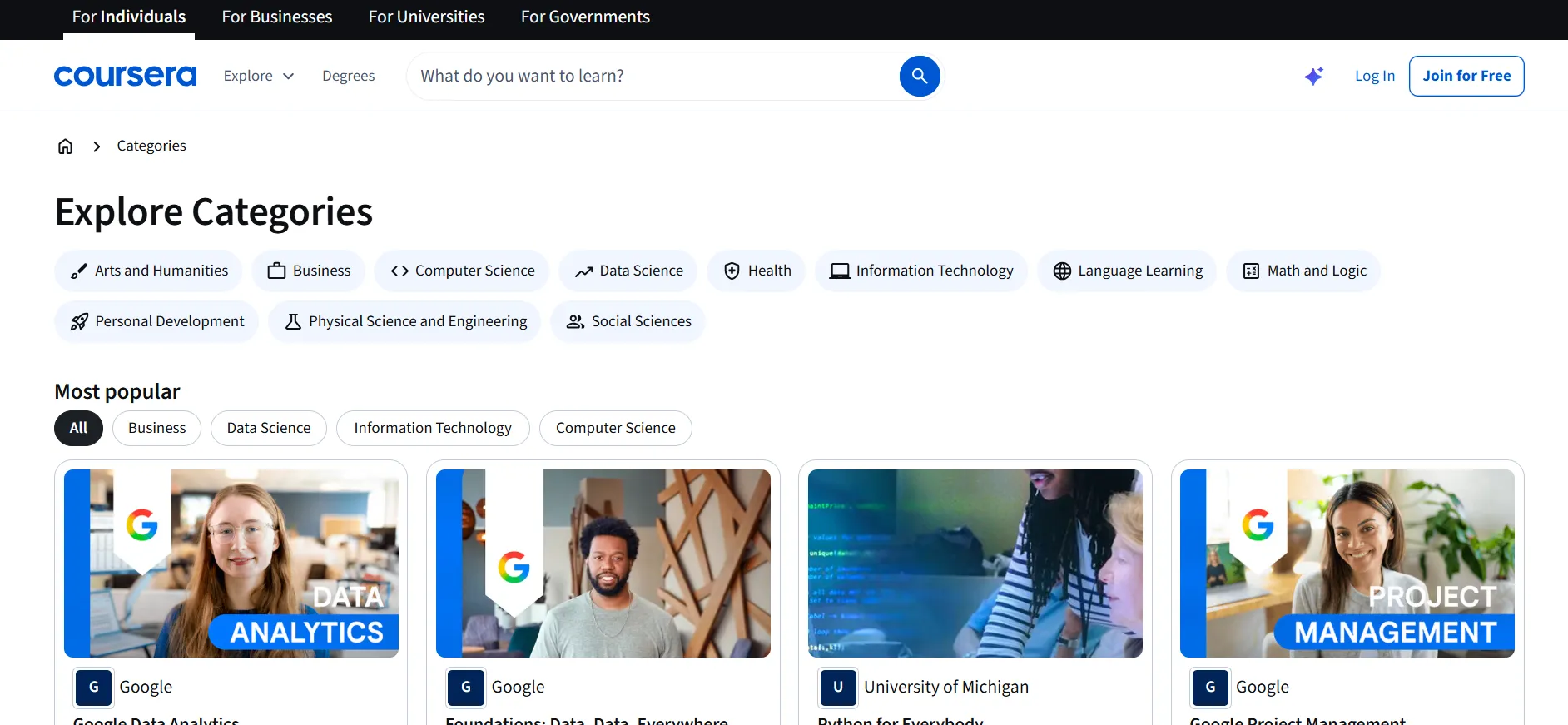
Coursera is an online learning platform that partners with universities and industry leaders to publish courses, Specializations, Professional Certificates, and full degree programs. Content spans data, business, technology, health, and personal development.
It fits complete beginners testing a new subject, professionals building a specific job-ready skill, career switchers working through a guided track, and small teams that want shared progress tracking. Students can also claim academic credit through select degree partners.
The free preview removes most of the guesswork. You can watch lectures and complete many readings in the first module of a course without a credit card, then decide whether the paid tier matches your goals.
Pricing: Is the $59 a Month Rate Worth It?
Coursera Plus monthly is commonly listed at $59 a month and includes unlimited access to 10,000+ courses, Specializations, most Professional Certificates, Guided Projects, and unlimited certificates. Coursera Plus annual is commonly listed at $399 a year, which works out to about $33.25 a month.
Single courses are often available as a one-time payment around $49, with Guided Projects starting near $9.99. Specializations and Professional Certificates usually run $49 to $79 a month until you finish the program.
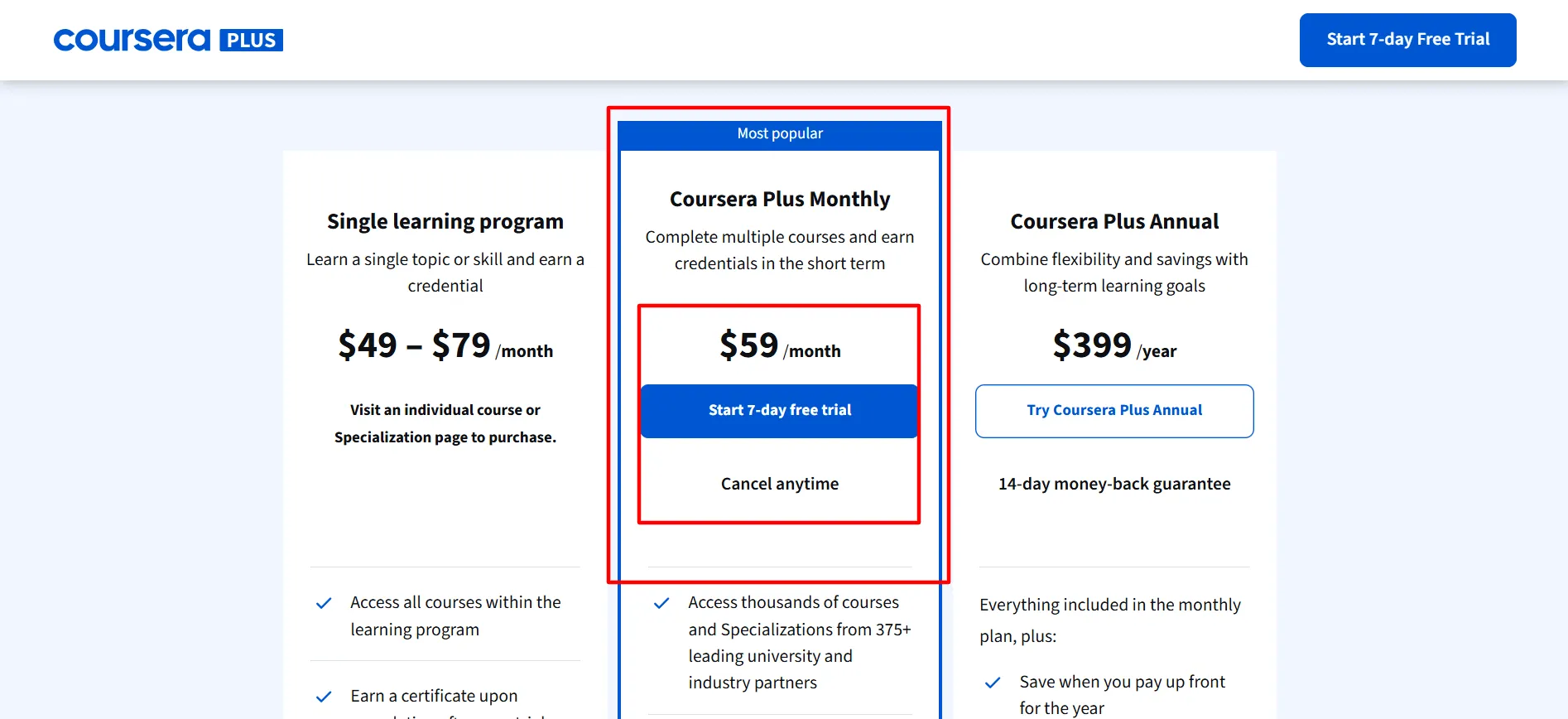
The monthly Plus rate is worth it for short-term study of one to six months. The annual rate becomes the better value once you pass roughly the seventh month, since twelve months of monthly billing totals more than the annual price.
Learners who finish only one certificate usually find a single course or program subscription cheaper than a full Plus plan. Learners who plan to explore several subjects over the year get more value from Plus.
Features That Decide the Value
Course certificates, Specializations, and Professional Certificates are the main credentials on offer, and all require a paid option to unlock. Many Professional Certificates come from recognised partners such as Google, IBM, and Meta, which can carry weight with employers.
Guided Projects let you practice a narrow skill in under two hours with a live instructor walkthrough. Hands-on assignments and peer-reviewed work appear across most Specializations, which push you past passive video watching.
Financial aid is available on many individual courses and Specializations for learners who cannot afford the listed price, and mobile apps on iOS and Android keep lessons available offline. These features are the reasons most learners move from the free preview to a paid plan.
Coursera Plus vs a Single Course: Which Should You Choose?
If you only need one specific credential and plan to finish it within a few months, a single course or one program subscription is usually the cheaper route, since you pay once and stop. If you expect to explore several subjects across the year, Coursera Plus spreads the cost of unlimited access over every course you touch.
Teams that need shared tracking and an admin dashboard generally outgrow a stack of personal Plus subscriptions and move to Coursera for Teams instead, which bills per user per year and adds license management on top of the same catalog.
Pros and Cons: Coursera Review 2026
Pros
- Free preview lets you sample the first module of most courses.
- 10,000+ courses, Specializations, and Professional Certificates in one catalog.
- Credentials from recognised universities and companies.
- Financial aid available for eligible learners.
- Flexible access: single course, subscription, or Coursera Plus.
Cons
- Certificates require a paid option, even after a free preview.
- Degree programs carry separate university tuition not covered by Plus.
FAQs: Coursera Review 2026
It is worth it for learners who finish multiple courses, want a recognised certificate, or need a structured path toward a new role. It is less worth it if you only sample the free preview.
Free previews cost nothing. Single courses often run a one-time $49. Specializations and Professional Certificates run $49 to $79 a month. Coursera Plus is commonly $59 a month or $399 a year. Teams and Enterprise are custom.
Yes. The free preview opens the first module of most courses without a credit card. There is also often a 7-day free trial on Coursera Plus monthly.
Certificates are awarded on paid single courses, Specializations, Professional Certificates, and Coursera Plus once you complete the required work. Free previews do not include a certificate.
Yes. You can move between free previews, single-course purchases, program subscriptions, and Coursera Plus. Teams and Enterprise changes require contacting sales.
Yes. Annual billing saves roughly $309 compared with twelve months of the monthly rate, so it becomes the better deal once you study past about seven months.
Quick Links:
Final Verdict: Coursera Review 2026
Coursera review findings for 2026 show the platform is worth it for learners who plan to finish more than the free preview. Coursera Plus at $59 a month, or $399 a year on annual billing, is the straightforward choice for anyone who expects to study regularly across several subjects.
A single course or one Specialization fits learners who need just one credential. Teams at the per-user annual rate fits small groups that want shared tracking. Enterprise and full degrees only fit organisations and learners who need those specific paths.
Use the free preview to confirm the teaching style, then move to a paid plan once you are ready to finish a course and collect the certificate. Check the pricing page for the exact current figures and any active promotions before you subscribe.
For learners who complete a solid number of courses, Coursera Plus usually lines up with the value they receive. The platform works best when the learning stays consistent rather than occasional.
